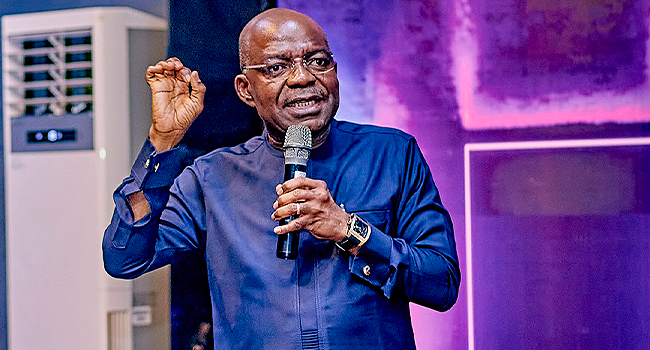
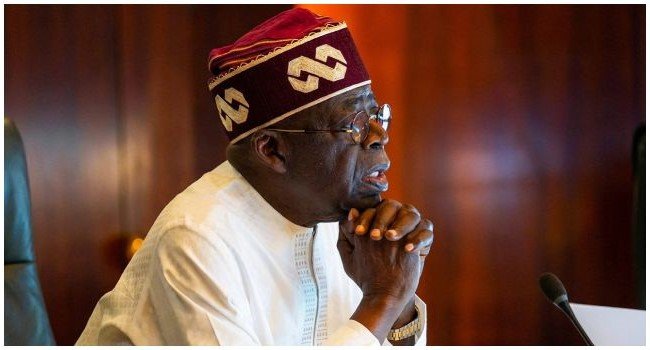

A chieftain of the African Democratic Congress (ADC), Ladan Salihu, has criticised President Bola Tinubu’s four-week stay in Europe, arguing that the prolonged absence raised concerns about presidential communication and the handling of national challenges.
Salihu, a former Director-General of the Federal Radio Corporation of Nigeria, made the remarks on Wednesday, September 30, during an appearance on Channels Television’s The Morning Brief, one day after Tinubu returned to Nigeria from France.
The President left Abuja on August 30 for what the Presidency initially described as a three-week annual vacation. He travelled first to London before continuing to Paris, where he held meetings with French President Emmanuel Macron and business leaders and participated in discussions surrounding a proposed $7 billion Ogun deep-sea port project.
The Presidency later extended the trip by several days, with Tinubu eventually returning to Lagos on September 29.
Salihu argued that the extended absence and limited direct communication from the President created concerns about leadership visibility at a time when Nigeria was dealing with security and economic challenges.
Salihu’s criticism centred on what he described as the President’s prolonged absence from Nigeria and the lack of direct communication with citizens during the trip.
He argued that Tinubu should have addressed Nigerians directly, particularly after reports of deaths and insecurity emerged in different parts of the country.
Among the incidents he referenced was the reported death of 37 miners in Niger State while in the custody of the Nigeria Security and Civil Defence Corps. He also cited reported killings and kidnappings in Zamfara State.
The ADC chieftain said the President could have used video messages or other direct communication channels to address Nigerians during the period.
His comments reflect a wider political debate over whether a president travelling abroad for an extended period should maintain a more visible public presence at home through regular national addresses and communications.
The criticism is political in nature and represents the position of the ADC chieftain rather than an established finding that government functions stopped during the President’s absence.
Tinubu’s trip lasted from August 30 until September 29, making the absence longer than the three-week vacation initially announced by the Presidency.
The President’s itinerary included both private and official engagements.
During his time in London and Paris, Tinubu:
- Met French President Emmanuel Macron.
- Held discussions with business leaders.
- Met Vincent Bolloré of the Bolloré Group.
- Met First HoldCo Chairman Femi Otedola.
- Witnessed the signing of an agreement involving the Ogun State Government and DP World.
- Participated in discussions around a proposed Gateway Deep Sea Port and Blue Marine Special Economic Zone in Ogun State.
The Presidency characterised the trip as a working vacation, maintaining that Tinubu continued to receive briefings and direct government affairs while abroad.
Special Adviser on Information and Strategy Bayo Onanuga also argued that modern communications technology meant the President did not have to be physically present in Abuja to carry out his responsibilities.
The dispute intensified after Tinubu did not attend the 81st United Nations General Assembly in New York.
Vice President Kashim Shettima represented Nigeria at the gathering, delivered the country’s national statement and participated in high-level meetings.
The Presidency said Shettima was acting with Tinubu’s full mandate and that Nigeria’s interests were adequately represented at the international gathering.
The decision nevertheless attracted criticism from opposition figures.
Former Vice President and ADC presidential candidate Atiku Abubakar previously questioned whether the constitutional procedure for a president’s temporary absence had been followed. Atiku referred to Section 145 of the Constitution and asked whether Tinubu had transmitted the required written declaration to the National Assembly.
Some lawmakers subsequently called for the National Assembly to reconvene and clarify the constitutional implications of the President’s extended stay abroad.
The constitutional question centres on Section 145 of the 1999 Constitution, which addresses presidential absence.
The provision states that when the President proceeds on vacation or is otherwise unable to perform the functions of office, he is to transmit a written declaration to the Senate President and House Speaker. It provides for the Vice President to perform presidential functions as Acting President until a contrary declaration is transmitted.
The provision also contains a 21-day mechanism under which the National Assembly can mandate the Vice President to perform presidential functions if the President fails to transmit the declaration.
This provision became a focal point of political criticism after Tinubu remained outside Nigeria beyond the initially announced 21-day vacation period.
However, the question of whether the constitutional requirement was satisfied is separate from the political criticism of the length of the President’s trip. An African Action Congress legal challenge filed in September also asked the Federal High Court to determine whether Tinubu complied with Section 145.
The Presidency has rejected suggestions that Tinubu’s absence meant the government was without effective leadership.
Onanuga said the President remained in contact with officials and continued to work while abroad. He described the trip as an approved working vacation and argued that Tinubu could perform his responsibilities remotely.
The administration also defended Shettima’s role at the UNGA, saying the Vice President had the President’s authority to represent Nigeria.
Separately, Nigeria’s Permanent Representative to the United Nations, Jimoh Ibrahim, defended the decision not to send Tinubu personally to New York. He said a significant proportion of speakers at the gathering were represented by vice presidents or foreign ministers.
These explanations contrast with the opposition’s argument that an extended presidential absence required greater constitutional and public clarification.
Tinubu returned to Nigeria on September 29 after approximately four weeks in Europe.
His aircraft arrived at the presidential wing of the Murtala Muhammed International Airport in Lagos at about 6:22 p.m.
Speaking briefly to journalists after his arrival, Tinubu said he had enjoyed his stay in Europe and dismissed concerns about his health, saying he was ready to resume his activities.
His return came shortly before Nigeria’s 66th Independence Anniversary on October 1.
The President is expected to participate in anniversary activities in Lagos, including a premiere connected to the late Moshood Kashimawo Olawale Abiola, before returning to Abuja.
Tinubu’s return has ended the immediate issue of his physical absence from Nigeria, but the political debate surrounding the trip is unlikely to disappear immediately.
The controversy now involves two separate questions: whether the President’s handling of his vacation complied with the constitutional framework governing presidential absence, and whether the Presidency communicated sufficiently with Nigerians during the period.
The first question is ultimately a matter for the relevant constitutional authorities and courts where litigation is pending. The second remains a matter of political judgment and public debate.
For the ADC, Salihu’s latest comments underscore its criticism of Tinubu’s leadership during the four-week trip. The Presidency, meanwhile, maintains that the President remained engaged in government and that his absence did not prevent him from carrying out his responsibilities.
With Tinubu back in Nigeria, attention will now shift to his resumption of domestic duties, Independence Day engagements and the continuing legal and political debate over the constitutional handling of extended presidential absences.