
Small-scale women farmers in Jigawa State are calling for increased government investment in agriculture and improved access to farmland, arguing that stronger budgetary support and secure land rights are essential to expanding their contribution to food production.
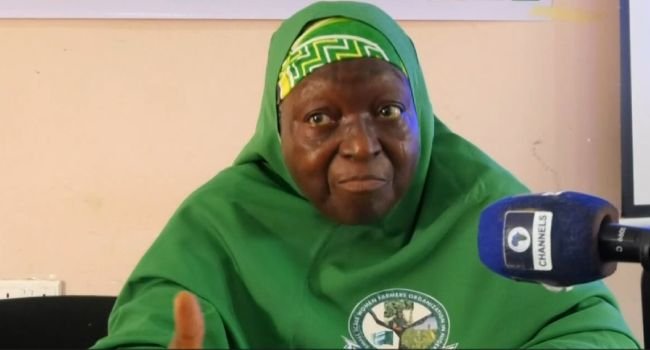
The demand was made by the Jigawa State chapter of the Small-Scale Women Farmers Organisation in Nigeria (SWOFON) during a press briefing in Dutse on the findings of a joint budget accountability assessment conducted with the International Budget Partnership (IBP).
SWOFON said agriculture received an average of 6.58 per cent of Jigawa State’s approved budgets between 2021 and 2025, below the 10 per cent agricultural spending benchmark associated with the African Union’s Malabo commitments. The organisation urged the state government to close the gap while improving how agricultural funds translate into support for farmers.
The group also identified land ownership and tenure arrangements as major barriers affecting women farmers, particularly those seeking to benefit from government agricultural programmes.
SWOFON’s appeal comes from an assessment covering Jigawa, Nasarawa, Niger, Anambra and Oyo states between 2019 and 2025.
According to findings presented by the organisation, Jigawa has developed stronger mechanisms for allowing citizens, including women farmers, to participate in the state budget process.
The state was identified as the only one among the five assessed where citizen participation in budgeting had become an established practice rather than an engagement conducted only when annual budgets were being prepared.
The assessment also found that women farmers’ priorities could be traced to specific provisions in Jigawa’s budget through a dedicated gender-budget component covering areas including agriculture, health and education.
However, SWOFON said greater participation in budget discussions needs to be matched by adequate funding.
Its recommendations include:
- Raising agricultural allocations towards the 10 per cent benchmark.
- Improving monitoring of agricultural spending.
- Tracking projects from budget approval through fund release and implementation.
- Publishing beneficiary information for agricultural interventions.
- Expanding women’s participation in local government budget processes.
SWOFON’s concerns extend beyond the size of the agricultural budget.
The organisation’s assessment found that Jigawa recorded an average agricultural capital expenditure execution rate of about 65.9 per cent during the period examined, according to the findings reported from the assessment.
This distinction is important because an approved allocation does not necessarily translate into completed projects or direct support for farmers.
For women farmers, the practical question is whether public spending results in resources such as:
- Farm inputs and fertiliser.
- Irrigation facilities and water access.
- Agricultural equipment.
- Credit and other financing opportunities.
- Extension services.
- Storage and processing infrastructure.
- Market connections.
The Jigawa State government’s own 2026 citizens’ budget-input document also records agricultural demands from communities, including timely fertiliser and input supplies, irrigation improvements and an agricultural incubation centre for women farmers and processors.
That suggests agricultural financing remains a recurring priority among communities across the state.
Beyond funding, SWOFON identified access to land as another critical obstacle for women seeking to expand agricultural production.
The organisation said customary land-tenure arrangements can restrict women’s ability to obtain secure control over farmland and, consequently, limit their ability to benefit from agricultural interventions.
Findings from the wider assessment showed that 84.9 per cent of surveyed SWOFON members across the five states reported some improvement in land access, but 24.5 per cent said they did not own land.
SWOFON is calling for a more transparent system for allocating agricultural land to women.
The proposed approach includes:
- Clearly identifying and mapping land allocated to women farmers.
- Providing secure land-use agreements.
- Establishing minimum tenure periods.
- Creating mechanisms for resolving land disputes.
- Connecting eligible women with farm settlements and irrigation schemes.
Secure tenure can also affect access to finance because farmers with uncertain rights over farmland may face greater difficulty making long-term investments in production.
Despite the concerns, SWOFON’s assessment identified several areas in which Jigawa has made progress.
The state reportedly has 13,680 women farmers registered within SWOFON, the largest membership among the five states covered by the assessment.
The organisation also said Jigawa had developed institutional structures that allow women farmers’ priorities to feed into the public budgeting process.
This provides a foundation for the state to move from participation towards measurable delivery.
SWOFON has therefore urged authorities to strengthen the systems already in place rather than treating each agricultural intervention as an isolated programme.
The group wants government agencies to publish information showing what was approved, what was released, what was delivered and how many farmers benefited.
SWOFON also wants greater connections between women farmers and the wider agricultural value chain.
The organisation recommended using its Village Savings and Loan Association structures to help eligible women connect with government programmes, farm settlements, irrigation projects and land-allocation initiatives.
The broader objective is to ensure that farmers have access not only to land and production inputs but also to financing, storage, processing and markets.
Recent agricultural initiatives in Jigawa have similarly highlighted the importance of improving women’s access to finance, storage, electricity and markets as part of strengthening agricultural value chains.
For smallholder farmers, those connections can determine whether increased production translates into higher household income.
The demands from Jigawa’s women farmers come as policymakers and development organisations continue to focus on food security and agricultural productivity.
The state’s geography and dependence on farming make access to productive land, irrigation, inputs and financing important to rural livelihoods. Research on women’s agricultural participation in Jigawa has also identified limited access to credit and extension services among challenges affecting participation in agricultural value chains.
SWOFON’s position is that women farmers should have a stronger role in determining how agricultural resources are allocated and monitored.
For Jigawa, the next challenge is converting established budget participation into measurable improvements on farms.
Increasing the agricultural allocation, securing land for women and publishing clear information on spending and beneficiaries would allow farmers and citizens to assess whether approved policies are producing tangible results.