
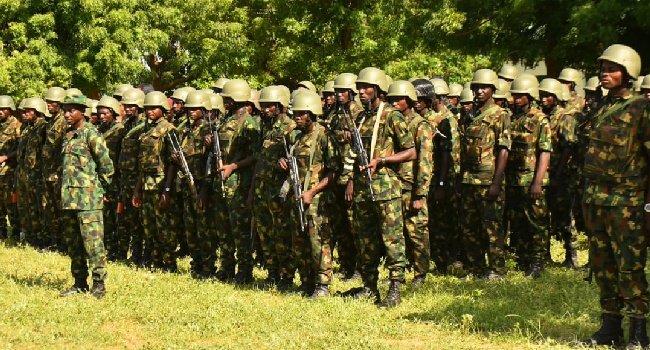

The Nigerian Army has expanded its operational presence in Kebbi State with the formal activation of the 28 Armoured Brigade and Garrison in Birnin Kebbi, alongside the 281 Tank Battalion in Yauri and 381 Artillery Regiment in Kaoje.
The Chief of Army Staff, Lieutenant General Waidi Shaibu, approved the operationalisation as part of efforts to strengthen Kebbi security, improve the military’s response to threats and protect communities facing attacks by criminal groups.
The development was announced on Monday, September 28, 2026, during an event in Kebbi where the General Officer Commanding 8 Division and Commander, Sector 2 Joint Task Force, North West, Operation FANSAN YAMMA, Major General Bemgba Koughna, represented the Army Chief.
The Army said the new formations will expand its footprint in the state and improve command and control across areas affected by security challenges.
The establishment of the three formations represents a broader restructuring of the Army’s presence in Kebbi.
The 28 Armoured Brigade will be headquartered in Birnin Kebbi, while the 281 Tank Battalion will operate from Yauri and the 381 Artillery Regiment from Kaoje.
According to the Army, the deployment is designed to:
- Strengthen the military’s presence in vulnerable areas.
- Improve response time when security threats emerge.
- Enhance command and control.
- Increase operational capacity across Kebbi.
- Provide additional fire-support capabilities.
- Improve coordination with other security agencies.
Major General Koughna said the move forms part of the Nigerian Army’s effort to optimise its force structure and position units closer to areas where they may be required.
The restructuring also gives the military additional platforms and formations through which it can respond to security threats across the North-West.
The Acting Commander of the 28 Brigade, Colonel Abdullahi Umar, received specific instructions on the role the formation is expected to play within the division’s area of responsibility.
Koughna charged the brigade to provide essential fire-support capabilities and improve the Army’s effectiveness during operations.
He also directed personnel to maintain discipline and tactical focus while observing professional standards.
The Army’s directive extends beyond combat operations. Personnel were told to work with other security agencies and relevant stakeholders while carrying out their constitutional responsibilities.
The GOC also emphasised adherence to the rules of engagement and the protection of civilians who are not involved in criminal activities.
This civilian-protection component will be important as the new formations begin operations in communities affected by banditry and other forms of insecurity.
The announcement comes as residents in parts of Kebbi continue to face security concerns.
During his engagement with residents, Koughna expressed condolences to the people of Jandutse community following the death of a resident in a recent bandit attack.
He subsequently assured the community that the military would increase its presence in the area to strengthen protection for residents.
The assurance provides an immediate local dimension to the Army’s decision to expand its presence across the state.
Rather than limiting the new formations to a structural change within the military, the Army is presenting the deployment as part of a wider effort to bring security resources closer to communities considered vulnerable to attacks.
Residents, in turn, expressed appreciation for the military’s continued efforts to improve security in Kebbi.
The operationalisation gives the Nigerian Army additional formations from which to coordinate land operations across the state.
The combination of an armoured brigade, tank battalion and artillery regiment also broadens the range of capabilities available to the Army’s formations in the area.
Their effectiveness, however, will depend on factors beyond the creation of new headquarters or units, including intelligence gathering, logistics, coordination among security agencies and the ability to sustain deployments in difficult terrain.
The Army has not stated that the new formations alone will eliminate banditry or other threats in Kebbi.
Instead, its stated objective is to strengthen its operational capacity and improve the speed and effectiveness of its response to emerging threats.
The development also fits into the Nigerian Army’s broader effort to reorganise its operational structure in response to security challenges across the North-West.
Operation FANSAN YAMMA covers military operations against criminal and armed groups in the region, making Kebbi’s location strategically important to the wider security architecture.
The Army said the new formations are expected to improve its operational footprint and response capacity across the North-West rather than serving only as isolated units within Kebbi.
The move could therefore affect how quickly troops and supporting capabilities are deployed when threats emerge in vulnerable communities.
Key areas to monitor include:
- The operational readiness of the new formations.
- Their deployment patterns across Kebbi State.
- Cooperation with police and other security agencies.
- The Army’s response to attacks on rural communities.
- The impact of improved military presence on vulnerable areas.
For residents, the immediate concern is whether the expanded military presence will translate into faster intervention and improved protection from attacks.
The Army has assured communities that it will increase its presence, particularly in areas affected by recent violence.
The operationalisation of the 28 Armoured Brigade, 281 Tank Battalion and 381 Artillery Regiment therefore marks a significant change in the military’s footprint in Kebbi State.
The next test will be the formations’ performance in the field and their ability to translate the additional operational capacity into sustained security for communities.
For now, the Nigerian Army says the restructuring is intended to strengthen Kebbi security, improve response times and provide better protection for residents while maintaining coordination with other security agencies.