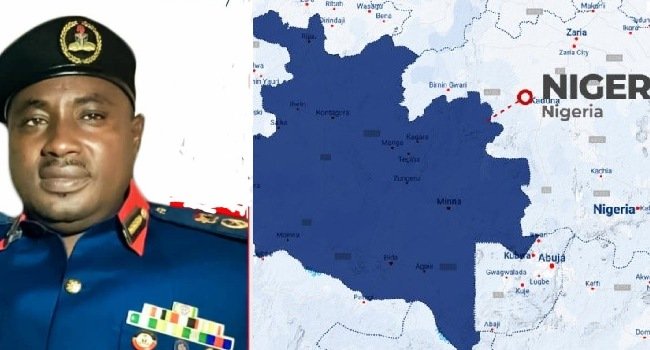


The Federal Government has suspended 20 officers of the Nigeria Security and Civil Defence Corps (NSCDC) in connection with the deaths of 37 suspected illegal miners in the Corps’ custody in Niger State, while establishing a 10-member independent committee to investigate the incident.
Minister of Interior Olubunmi Tunji-Ojo announced the measures on Saturday, September 19, 2026, following President Bola Tinubu’s directive for a comprehensive investigation into the deaths, which occurred on Thursday, September 17.
The suspension also covers the Niger State NSCDC Commandant, Suberu Siyaka Aniviye, meaning 21 NSCDC personnel have been removed from active duties pending the outcome of the inquiry. The Federal Government says the investigation will examine the arrests and detention of the victims, establish the cause and circumstances of their deaths, and determine whether negligence, misconduct or other forms of responsibility occurred.
The development follows growing public concern after the deaths triggered protests and a 24-hour curfew in Minna, the Niger State capital.
The deceased were among people arrested during NSCDC operations targeting suspected illegal mining around the M.I. Wushishi and Lukoto areas of Niger State on September 15 and 16.
The NSCDC initially reported that the detainees had died following a suspected disease outbreak. However, the Corps later said the actual cause of death had not been established and would require medical and laboratory examination.
Niger State Governor Umaru Bago subsequently confirmed that 37 people had died in NSCDC custody and said forensic examinations, medical investigations and autopsies were being conducted.
Bago also said authorities were examining several possible explanations, including overcrowding and exposure to hazardous substances associated with illegal mining. He cautioned against reaching conclusions before the investigations were completed.
The circumstances have consequently remained a central focus of the government’s investigation.
Full List of 20 Suspended NSCDC Officers
The Interior Ministry released the names and roles of the 20 officers suspended alongside the Niger State Commandant.
They are:
- SC Usman Isah Ndamaka — O/C Station Guard
- ASCI Hassan Mohammed — Station Guard
- CCA Bala Mohammed — Station Guard
- CSC Oluwadare Sunday — Arresting Officer/O/C Investigation
- DCC Obafemi Elvis — Arresting Officer
- CSC Annas Shitto Lamino — Arresting Officer
- DCC Philip Ajayi — HOD Intelligence/Investigation
- ACC Barr. Stephen Tsado — O/C Legal
- ASCI Alhassan Mohammed — Day/Night Duty Officer
- IC Abdullahi Sale — Guard Duty
- IC Mohammed Sonfada — Guard Duty
- CAI Liman Abubakar — Guard Duty
- CAI Bala Usman — Guard Duty
- IC Mohammed Jiya — Guard Duty
- DSC Isah Suleiman — Guard Duty
- CAI Ahmed Wushishi — Guard Duty
- IC Sale Adamu — Guard Duty
- IC Haruna Mohammed — Guard Duty
- ASCI Aliyu Sallah — Guard Duty
- CAI Isah Sanusi — Guard Duty
The Niger State NSCDC Commandant, Suberu Siyaka Aniviye, was also suspended. The Federal Government said all affected personnel would remain suspended until the independent investigation is concluded.
Tunji-Ojo also constituted a 10-member independent committee to investigate the incident.
The committee is chaired by Jonathan Kure, a retired Deputy Director-General of the Department of State Services (DSS), while Professor Isa Hayatu Chiroma, SAN, a former Director-General of the Nigerian Law School, will serve as secretary.
Members of the Investigation Panel
The committee comprises:
- Jonathan Kure, mni — Chairman; retired DSS Deputy Director-General
- Prof. Isa Hayatu Chiroma, SAN — Secretary; former Director-General, Nigerian Law School
- AIG Hosea Hassan Karma (retired) — Member
- Prof. Olayinka Buhari — Professor of Histopathology and former Chief Medical Director, University of Ilorin Teaching Hospital
- Representative of the Minna Emirate Council
- Representative of the Niger State Government
- Alhaji Liman Sulaiman — National Secretary, Miners Association of Nigeria
- Deji Adeyanju — Lawyer and human rights activist
- Zainab Suleiman Okino — Blueprint Newspaper
- Dr George Agbakahi — Public Affairs Analyst
The Federal Government said the committee may bring in additional specialists where necessary and has authority to access relevant documents and facilities, visit locations connected to the incident and receive memoranda from members of the public.
The committee has been given two weeks to complete its assignment and submit its report to the Minister of Interior.
Its terms of reference include establishing the identities of the deceased, examining the circumstances surrounding their arrest and detention, and determining the cause and manner of death.
The panel is also expected to establish whether any individual or institution bears responsibility for the incident.
Specifically, the government wants the investigation to examine:
- The identities of all 37 deceased persons.
- The circumstances surrounding their arrests.
- Their treatment and conditions while in custody.
- The cause and circumstances of the deaths.
- Possible responsibility, complicity, negligence or misconduct.
- Appropriate sanctions or other measures where necessary.
- Compensation for affected families where applicable.
- Steps required to prevent a recurrence.
The minister directed NSCDC officials and other relevant authorities to cooperate with the panel and preserve all documents and material evidence connected with the case.
The Federal Government’s investigation comes amid unrest in Minna following the deaths.
Protests broke out as residents demanded answers over the circumstances in which the detainees died. The unrest reportedly resulted in damage to public and private property, prompting Governor Bago to impose a 24-hour curfew in the state capital.
The governor had earlier appealed for calm while authorities investigated the incident.
Bago said forensic and medical examinations were underway to establish the scientific cause of death. The state government also constituted its own committee of inquiry.
The Federal Government’s new panel therefore adds another layer of investigation to inquiries already initiated by state and security authorities.
Tunji-Ojo warned that anyone who attempts to interfere with the investigation could face serious consequences.
The minister directed relevant agencies to preserve records and other evidence that could assist the panel. He also said efforts to destroy or conceal evidence, intimidate witnesses or obstruct the inquiry would be treated as a serious offence.
That directive places particular emphasis on the preservation of custody records and other information that could help investigators reconstruct what happened between the detainees’ arrest and their deaths.
The investigation is expected to provide a factual account of the incident rather than rely on preliminary explanations.
The immediate focus is on the independent committee’s investigation and the medical evidence surrounding the deaths.
The government has not publicly established a definitive cause of death. Statements suggesting possible disease, overcrowding or exposure to hazardous substances remain part of the competing explanations under investigation rather than established findings.
The panel’s report could determine whether disciplinary, criminal, administrative or compensatory measures are warranted.
For the families of the 37 deceased persons and the wider public, the central issue remains establishing what happened while the suspects were in government custody and whether any failures contributed to their deaths.
The Federal Government has urged calm while the investigation proceeds and says the process should provide an account of the circumstances surrounding the incident.