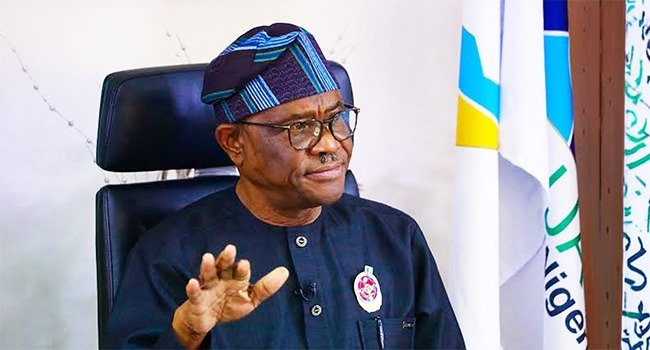

The Federal Government has ruled out plans for an increase in electricity tariffs, with Minister of Power Joseph Tegbe saying the administration is concentrating on improving power supply and fixing structural problems across the electricity value chain.
Tegbe gave the assurance on Monday, September 21, 2026, in Abuja during a media briefing marking his first 100 days in office. His statement followed reports that the government could review electricity tariffs upward, prompting calls and inquiries from members of the public.
The minister said the government was not pursuing an additional tariff burden on electricity consumers and instead wanted to strengthen generation, transmission and distribution.
His comments come as the power sector continues to face financial pressures, ageing infrastructure, gas-supply constraints and concerns over the reliability of electricity supplied to households and businesses.
The Nigerian Electricity Regulatory Commission (NERC) has also continued to publish monthly regulatory materials under the Multi-Year Tariff Order framework, including September 2026 documents for electricity distribution companies.
Tegbe said he received several calls over the weekend after reports emerged suggesting that the Federal Government was preparing to increase electricity tariffs.
He rejected the reports and said the administration’s immediate priority was to improve the quality and reliability of electricity supplied to Nigerians.
The minister characterised the reports as politically motivated, while stressing that the government was working on measures intended to strengthen the sector rather than place additional financial pressure on consumers.
The clarification is significant because electricity pricing remains one of the most closely watched issues in Nigeria’s power sector, particularly for households and businesses already dealing with high operating costs.
Tegbe’s position can be summarised around three areas:
- No immediate increase in electricity tariffs, according to the minister.
- Greater emphasis on improving electricity supply and grid performance.
- Continued efforts to address financial and infrastructure problems across the sector.
The minister said Nigeria’s electricity problems extend across the entire value chain, meaning that increasing generation alone would not resolve the country’s power challenges.
Tegbe said an assessment conducted after he assumed office identified constraints affecting gas supply, generation infrastructure, transmission networks and the commercial relationships supporting the electricity market.
Reports from the minister’s first-100-days briefing indicated that generation and transmission had risen above 5,000 megawatts in recent weeks, compared with roughly 3,700MW to 4,700MW before June. Generation reportedly reached a peak of 5,330MW in August and September.
However, Tegbe acknowledged that higher national generation figures do not automatically mean every community is receiving reliable electricity.
That distinction remains important because electricity consumers experience supply through individual distribution networks and feeders, where technical faults, inadequate infrastructure and other constraints can limit the amount of power reaching end users.
Tegbe also used the briefing to outline infrastructure and financial measures undertaken during his first 100 days as power minister.
According to reports of the briefing, the government restored the 375MW Alaoji open-cycle power plant to the national grid after it had remained offline for about three years.
It also commissioned transformers at several locations in Lagos, including Apapa, Ijora, Alausa and Lekki, with the interventions reportedly unlocking 672MW of transmission capacity.
A 300MVA transformer at Katampe in Abuja was also commissioned, with the minister saying it unlocked an additional 240MW of transmission capacity.
On the financial side, Tegbe said the government had raised an estimated ₦1.23 trillion towards addressing part of the power sector’s ₦3.3 trillion legacy debt.
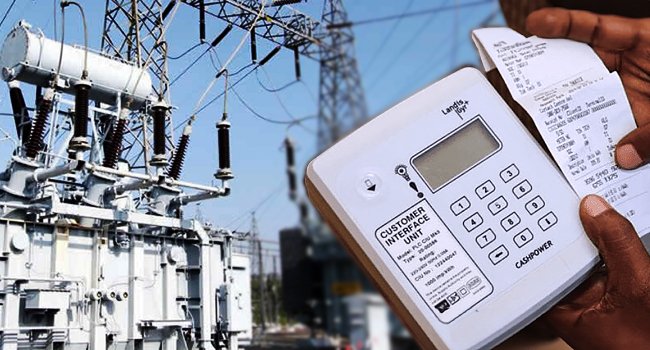
The minister also reported the installation of about 350,000 electricity meters during his first 100 days, taking cumulative installations to more than one million by August 2026.
Metering remains an important part of the government’s strategy because accurate measurement of electricity consumption is linked to billing transparency and revenue collection.
Tegbe said the resolution of litigation surrounding the AMMON metering programme had also cleared the way for the procurement of approximately 1.4 million smart meters.
The government is also preparing for further transmission interventions, particularly along major electricity corridors.
The next phase is expected to focus on:
- Lagos transmission corridor;
- Enugu-Port Harcourt corridor;
- Abuja-Kaduna-Kano corridor;
- Development of a proposed Transmission Super Grid;
- Improved supply reliability and faster resolution of faults and complaints.
Tegbe said technical audits had begun on the Lagos and Abuja corridors as part of efforts to identify weaknesses within the transmission network.
For consumers, the immediate significance of Tegbe’s announcement is that the Federal Government is not currently pursuing another electricity tariff increase, according to the minister.
However, the statement does not eliminate the wider financial challenges facing Nigeria’s electricity market.
The sector still needs sustained investment in generation, gas infrastructure, transmission, distribution and metering. At the same time, electricity companies face commercial and liquidity pressures that can affect their ability to maintain infrastructure and provide consistent service.
The government therefore faces the challenge of improving electricity supply while addressing the sector’s financial weaknesses without imposing additional costs on consumers.
The minister said the administration would assess its performance over the following six months using indicators such as supply reliability, billing accuracy and the resolution of electricity faults and complaints.
For now, the Federal Government’s position is clear: there is no plan to increase electricity tariffs, while its immediate focus remains on stabilising the power system and improving the service received by Nigerians.