
Manchester United recorded a seventh consecutive annual loss after its deficit widened to £43 million for the financial year ended June 30, 2026, despite the club generating a record £677.6 million in revenue.
The figures, released on Wednesday, September 23, show that revenue increased by £11.1 million, or 1.7%, from the previous year’s £666.5 million record. However, the club’s loss rose from £33 million in the previous financial year.
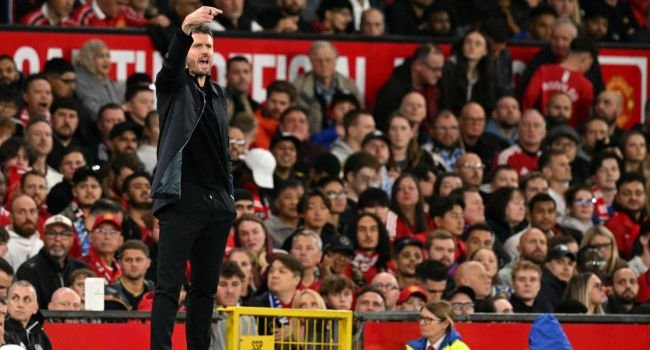
The results cover the 2025/26 season, when United finished third in the Premier League under Michael Carrick after a difficult campaign that included the departure of Ruben Amorim. The third-place finish secured Champions League football for the 2026/27 season.
Despite the annual loss, United reported a significant improvement in its underlying operating performance. The club generated an operating profit of £22.6 million, compared with an operating loss of £18.4 million a year earlier. Adjusted EBITDA also reached a record £216.4 million.
United’s record turnover is notable because the men’s first team did not participate in UEFA competition during the 2025/26 campaign.
Broadcasting revenue provided the biggest boost, rising 19.6% to £206.8 million. The increase was primarily linked to United’s improved Premier League position, with the club climbing from 15th in 2024/25 to third the following season.
The club’s revenue performance was more mixed in other areas.
- Total revenue: £677.6 million, up 1.7%.
- Broadcasting revenue: £206.8 million, up 19.6%.
- Commercial revenue: £317.3 million, down 4.8%.
- Matchday revenue: £153.5 million, down 4.2%.
- Adjusted EBITDA: £216.4 million, up 18.4%.
- Operating result: £22.6 million profit, compared with an £18.4 million loss.
The revenue mix illustrates how United’s improved league performance helped offset the financial effect of missing European competition.
While overall turnover reached a new high, United’s commercial and matchday businesses recorded declines.
Commercial revenue fell by approximately £16 million to £317.3 million, while sponsorship income declined by 14.8% to £160.5 million. Retail, merchandising, apparel and product licensing moved in the opposite direction, increasing 8.2% to £156.8 million.
Matchday revenue also dropped to £153.5 million, a £6.8 million decline from the previous year.
The reduction was partly connected to United playing 10 fewer home matches because it did not participate in European competition.
Despite the lower number of fixtures, the club said demand remained strong for general admission and hospitality offerings.
The financial results demonstrate that United’s commercial and broadcast operations generated record turnover even during a season without European football.
The club’s return to the Champions League for 2026/27 could therefore provide another significant source of broadcasting and matchday income during the current financial year.
United has forecast £740 million to £760 million in revenue for fiscal 2027, alongside adjusted EBITDA of between £205 million and £225 million.
United’s 2025/26 accounts also include costs connected with the departure of former head coach Ruben Amorim.
Exceptional items amounted to £8.2 million, with the majority associated with Amorim’s departure and the final costs of the club’s restructuring programme.
Amorim left the club in January after approximately 14 months in charge, with former United midfielder Michael Carrick subsequently taking over.
Carrick guided the team to a third-place Premier League finish, securing Champions League qualification for the following campaign. United had finished 15th in the previous season.
The improvement on the pitch was reflected in the club’s broadcasting income, although it came too late to prevent another annual accounting loss.
United’s accounts also show progress in reducing operating costs.
The club’s wage bill fell by £11.3 million, or 3.6%, to £302 million. The reduction followed changes to the men’s first-team squad and broader headcount-reduction measures implemented over the previous two years.
The club consequently moved from an operating loss of £18.4 million in fiscal 2025 to an operating profit of £22.6 million in fiscal 2026.
That improvement, however, did not eliminate the overall loss because financing costs, player-related accounting charges and other expenses continued to affect the bottom line.
United’s accounts show that amortisation rose to £211.8 million, an increase of £15.4 million, reflecting continued investment in the first-team squad.
The financial report also provides a clearer picture of United’s long-term stadium plans.
The club spent £63.5 million acquiring land required for its proposed new 100,000-seat stadium, forming part of a wider plan to redevelop the Old Trafford area.
Overall capital expenditure on property, plant and equipment reached £85.9 million during the financial year, an increase of £41.2 million from the previous period.
The land acquisition represents a major step in the proposed stadium project, although the new ground remains a longer-term investment rather than an immediate source of revenue.
United’s major financial figures
| Financial measure | 2026 | Previous year |
|---|---|---|
| Revenue | £677.6m | £666.5m |
| Net loss | £43.0m | £33.0m |
| Operating result | £22.6m profit | £18.4m loss |
| Adjusted EBITDA | £216.4m | £182.8m |
| Wage bill | £302m | £313.3m |
| Broadcasting revenue | £206.8m | £172.9m |
The figures show a business that generated more revenue and substantially improved its operating performance while still ending the year with a statutory loss.
United’s financial position also includes substantial borrowing.
Non-current borrowings stood at £577.6 million at June 30, 2026, compared with £471.9 million a year earlier after the refinancing of the club’s senior secured notes.
The club also reported current borrowings, including accrued interest, of £111.4 million, down from £165.1 million the previous year. Cash and cash equivalents stood at £67.2 million, compared with £86.1 million a year earlier.
United also generated £178.7 million in net cash from operating activities, up from £72.7 million in the previous financial year.
These figures provide additional context to the headline loss because accounting profit and loss does not directly measure the club’s cash generation.
United’s return to the Champions League is one of the most significant factors heading into the new financial year.
The club missed European competition entirely in 2025/26 but qualified for Europe’s premier club competition after finishing third in the Premier League.
That return should increase the number of competitive fixtures and provide additional broadcasting and commercial opportunities. However, the financial results for 2026/27 will also reflect player investment, financing costs, stadium expenditure and the club’s wider cost-control programme.
United has projected £740 million to £760 million in revenue for fiscal 2027, indicating that the club expects turnover to rise significantly as European football returns.
What the figures show
The latest accounts present several developments simultaneously:
- United achieved its highest-ever annual revenue.
- The club recorded its seventh consecutive annual loss.
- The annual loss increased from £33 million to £43 million.
- Operating performance moved into profit.
- Adjusted EBITDA reached a record level.
- The wage bill declined.
- The club invested £63.5 million in land for its proposed new stadium.
- Champions League football returns in 2026/27.
Manchester United’s latest financial results show the contrast between strong revenue generation and the continuing costs associated with running and rebuilding the club.
The £43 million loss remains significant, but the improvement in operating performance and record adjusted EBITDA point to changes in the club’s cost base and revenue generation.
The next set of accounts will provide a clearer indication of how much the Champions League return contributes to United’s finances and whether the club can convert its improved operating performance into an overall profit.
For now, the 2026 results establish a mixed financial picture: record turnover and improved operating performance alongside another annual loss and substantial long-term investment commitments.