
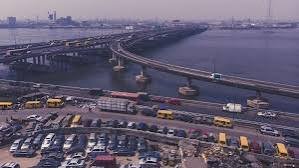

The Federal Government has reduced the planned completion period for the Carter Bridge reconstruction in Lagos from 36 months to 24 months, as authorities move to replace the ageing structure while keeping traffic moving across one of the city’s busiest transport corridors.
Minister of Works, Dave Umahi, announced the revised timeline on Monday, August 24, 2026, during an inspection of the Carter Bridge and Iddo Bridge projects in Lagos. He said the decision to accelerate the project reflects the bridge’s importance to vehicular movement in the metropolis.
The 1.58-kilometre Carter Bridge has served Lagos for more than six decades. According to the minister, technical investigations found serious deterioration in its underwater structural components, making a complete reconstruction necessary rather than another rehabilitation exercise.
The Federal Government’s decision to reconstruct Carter Bridge followed structural assessments that identified significant damage to the bridge’s foundations.
Umahi said underwater inspections found problems affecting the piles and pile caps, alongside rust, erosion-related scouring and the effects of illegal sand mining. These issues have raised concerns about the long-term safety and reliability of the existing structure.
The Federal Executive Council had earlier approved the demolition and reconstruction of the bridge after technical assessments concluded that rehabilitation would no longer provide a sustainable solution. The government subsequently moved to hand the new project to China Civil Engineering Construction Company (CCECC).
The project was approved at an estimated cost of ₦548.98 billion, according to earlier reports on the Federal Government’s decision.
The reconstruction is not simply intended to replace the existing bridge. The Federal Government says the new design will introduce features aimed at improving traffic circulation and protecting the structure from future deterioration.
Key features include:
- Additional ramps to improve traffic movement.
- Separate carriageway levels in some sections to improve circulation.
- A cable-stayed section designed to provide adequate clearance for navigation.
- Protective structures, including gabions, to reduce erosion and scouring around the foundations.
- Engineering features intended to significantly extend the bridge’s service life.
Umahi said the redesigned bridge would combine structural engineering with traffic-management measures, reflecting the heavy pressure placed on Lagos’ road network.
The minister also expressed confidence that the reconstructed bridge could remain functional for more than 100 years if the new engineering and maintenance measures are properly sustained.
CCECC, the contractor handling the project, has already begun preliminary activities at the site.
According to Umahi, approximately 15 per cent of the preparatory work had been completed by the time of his inspection. This includes establishing a project yard and constructing access roads.
The minister said piling work was expected to begin before the end of the week, marking an important transition from preliminary preparations to major structural construction.
The government’s decision to shorten the completion schedule from 36 months to 24 months will, however, place greater pressure on project execution, logistics and traffic management.
One of the biggest challenges facing the Carter Bridge reconstruction is maintaining traffic through the corridor while construction continues.
Umahi said the existing bridge cannot simply be shut down because of its strategic importance to Lagos’ transport network. The government therefore plans to continue monitoring and maintaining the existing structure during the construction period.
This approach is particularly significant because Carter Bridge serves as a major link around Lagos Island and carries substantial daily vehicular traffic. A prolonged total closure could put additional pressure on alternative routes and worsen congestion across the metropolis.
The government’s strategy is therefore to balance construction with continued access, rather than sacrifice traffic movement for faster construction.
The inspection also covered the Iddo Bridge, another important piece of infrastructure in Lagos.
The Federal Government is carrying out intervention work on the bridge alongside the Carter Bridge reconstruction. Earlier project updates indicated that damaged spans were being replaced, while drainage and pavement works were also progressing.
The simultaneous attention to the two bridges highlights the government’s broader attempt to address ageing infrastructure along critical transport routes in Lagos.
Umahi also said similar intervention work was being undertaken on the Third Mainland Bridge, with the government targeting a substantial extension of its service life.
The revised completion target could reduce the period during which motorists and residents have to contend with construction-related disruption around Carter Bridge.
However, meeting the 24-month deadline will depend on consistent funding, uninterrupted construction activity, effective traffic management and the contractor’s ability to maintain the accelerated pace.
For Lagos, the importance of the project extends beyond replacing an old bridge. The reconstruction is expected to provide a more modern crossing, improve traffic circulation and strengthen a vital connection within the city’s transport network.
The immediate priority remains ensuring that construction progresses without compromising the safety of the existing bridge or creating avoidable disruption for motorists. If the Federal Government and CCECC meet the revised schedule, the new Carter Bridge could become a significant upgrade to Lagos’ ageing road infrastructure within the next two years.
The Federal Government’s decision to target completion of the Carter Bridge reconstruction within 24 months represents a significant acceleration of a project originally scheduled to take three years.
With preliminary works underway and piling expected to commence shortly, attention will now shift to whether the contractor can sustain the required pace while keeping the existing bridge operational.
The success of the project will ultimately be measured not only by how quickly the new bridge is delivered, but also by its ability to withstand Lagos’ heavy traffic, environmental pressures and long-term maintenance challenges.