
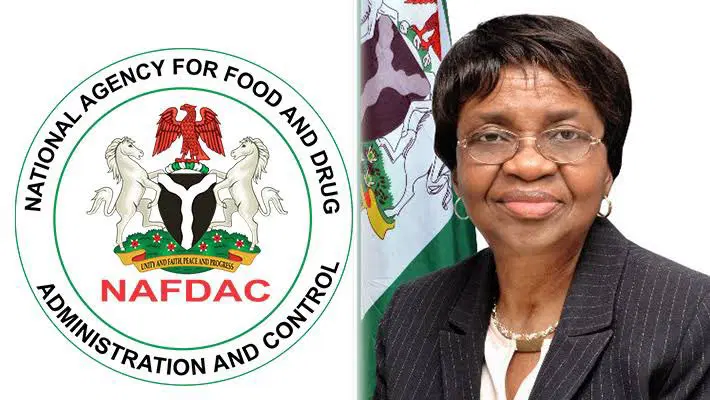

The National Agency for Food and Drug Administration and Control (NAFDAC) has raised fresh concerns over alcohol abuse in Nigeria, linking indiscriminate consumption to serious social and health consequences, including behaviour associated with banditry and damage to vital organs.
NAFDAC Director-General, Professor Mojisola Adeyeye, made the remarks during an interview on Channels Television’s Sunrise Daily on Wednesday, September 9, 2026, while defending the agency’s restrictions on alcoholic beverages sold in sachets and PET bottles below 200 millilitres.
Adeyeye said the accessibility of alcohol in small packages had become difficult to control and was particularly concerning because of its potential impact on young people.
She also warned that excessive alcohol consumption can harm organs including the brain, liver and kidneys, reinforcing NAFDAC’s position that tighter controls are necessary to reduce alcohol-related harm.
According to Adeyeye, alcoholic drinks in sachets and very small PET containers were approved many years ago, but the products eventually became associated with widespread misuse.
NAFDAC has consequently moved to enforce restrictions on alcoholic beverages packaged in containers below 200ml. The agency’s renewed enforcement campaign follows the expiration of transition arrangements that had allowed manufacturers and distributors time to adjust to the policy.
The current regulatory approach covers:
- Alcoholic drinks packaged in sachets.
- Alcoholic beverages sold in PET or plastic containers below 200ml.
- Manufacturers, distributors and retailers involved in prohibited products.
- Products being removed from the market through recall and enforcement operations.
NAFDAC’s argument is that smaller packages make alcohol relatively cheap, portable and easier to access, particularly for young consumers.
The agency has faced resistance from some traders and retailers who say enforcement is affecting their businesses. Retailers in Lagos recently protested against the crackdown and called for a review of the policy.
Adeyeye’s latest warning goes beyond the medical consequences of drinking.
The NAFDAC boss linked indiscriminate alcohol consumption with harmful social behaviour and specifically identified banditry among the security problems associated with alcohol abuse. The agency has previously warned that alcohol can contribute to violence, accidents and other harmful activities involving young people.
However, NAFDAC’s statement represents a regulatory and public-health assessment rather than evidence that alcohol consumption is the sole cause of banditry in Nigeria.
Banditry has multiple underlying drivers, including organised criminal networks, weapons proliferation, insecurity and economic pressures. Alcohol may be viewed by the agency as one factor capable of worsening harmful behaviour rather than a standalone explanation for the security crisis.
That distinction is important as authorities consider how best to address both substance abuse and insecurity.
The health concerns behind NAFDAC’s campaign are also significant.
Adeyeye specifically identified the brain, liver and kidneys as organs that can suffer from alcohol-related harm. Prolonged or excessive alcohol consumption is widely recognised as a public-health concern because it can contribute to a range of diseases and injuries.
NAFDAC’s current campaign therefore combines regulatory enforcement with a broader argument for reducing access to alcohol, particularly among children and young adults.
Key concerns highlighted by NAFDAC
- Liver damage: Heavy alcohol consumption can cause serious liver disease.
- Kidney health: Alcohol can contribute to conditions that place additional stress on kidney function.
- Brain and behaviour: Alcohol affects brain function and can impair judgement and decision-making.
- Youth access: Small, inexpensive packages can make alcohol easier for young people to obtain.
- Social harm: Alcohol misuse can contribute to violence and other risky behaviour.
The agency’s emphasis on children is central to its justification for restricting small-format alcoholic products.
The latest warning comes as Nigeria expands enforcement of its restrictions on small-volume alcoholic beverages.
NAFDAC ordered manufacturers in August to recall alcoholic drinks packaged in sachets and containers below 200ml. The agency said affected products would be inventoried and destroyed under its supervision, with manufacturers responsible for the cost.
The Federal Government has also introduced the Nigeria Alcohol Policy and Multisectoral Implementation Plan 2026–2030, providing a broader framework for reducing alcohol-related harm and improving regulation of production, marketing, distribution and consumption.
The policy signals that alcohol regulation is increasingly being treated as a cross-sector issue involving health, consumer protection, education and social welfare.
While NAFDAC maintains that the restrictions are necessary to protect public health, the policy has generated concerns among businesses that depend on alcohol sales.
Retailers have argued that the enforcement campaign threatens their livelihoods, particularly for small traders who invested in prohibited products before the latest phase of enforcement.
The disagreement creates a difficult regulatory balance: authorities must protect consumers from harmful alcohol use while also managing the economic consequences for manufacturers, distributors and retailers.
NAFDAC, however, has continued to insist that public health remains the priority.
The agency is expected to maintain surveillance and enforcement against prohibited alcoholic products as manufacturers adjust their operations and retailers remove affected products from circulation.
The effectiveness of the policy will ultimately depend not only on seizures and enforcement but also on public education, responsible consumption and stronger controls over access by minors.
NAFDAC’s latest position places alcohol abuse within a much broader national conversation about public health, youth protection and social stability. While alcohol alone cannot explain Nigeria’s banditry crisis, the agency argues that reducing harmful consumption is an important part of tackling the consequences of substance abuse.
For consumers, the central message from the regulator is clear: greater access to small-format alcohol should not come at the expense of long-term health or public safety.