
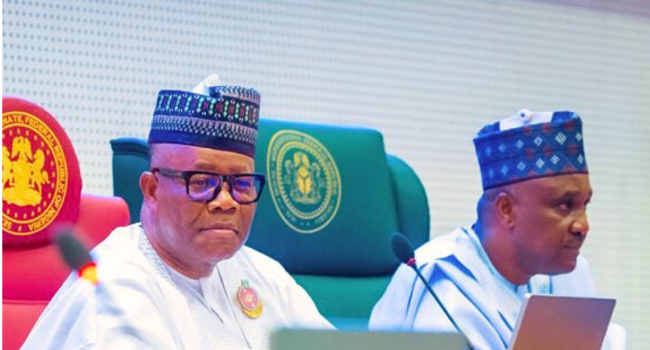

Nigeria’s National Assembly has suspended official legislative engagements with South Africa in response to continued reports of xenophobic attacks targeting Nigerians and other African nationals in the country.
The decision, announced on Friday, September 11, 2026, affects visits by senators, members of the House of Representatives, parliamentary committees and National Assembly officials to South Africa. It also extends to legislative conferences, seminars, workshops, exchanges and other programmes organised or hosted by South African legislative authorities.
The suspension follows months of concern over attacks, deaths, displacement and damage to businesses and property belonging to Nigerians in South Africa. It represents one of the strongest institutional responses by Nigeria’s legislature since the latest wave of anti-foreigner hostility emerged earlier this year.
The National Assembly said the measure would remain in effect until further notice and could be reviewed depending on developments.
The resolution followed consultations between the leadership of the Senate and House of Representatives.
According to the statement signed by Clerk to the National Assembly, Kamoru Ogunlana, the suspension covers both physical attendance and online participation in legislative programmes hosted by South African authorities.
The affected activities include:
- Official visits to South Africa;
- Parliamentary conferences and meetings;
- Legislative exchange programmes;
- Seminars and workshops;
- Committee-level engagements;
- Other programmes organised by South African legislative institutions; and
- Virtual or online participation in such activities.
The Clerk has been directed to communicate the decision to lawmakers, committees, departments, directorates and staff to ensure compliance.
The National Assembly also urged state Houses of Assembly to take note of the decision, leaving open the possibility of similar measures at the subnational level.
The legislative boycott comes against the backdrop of renewed anti-foreigner activity in South Africa, including protests and attacks involving African migrants.
Nigeria has repeatedly raised concerns about the safety of its citizens with South African authorities. In May, the Nigeria Police Force warned against reprisal attacks in Nigeria while saying federal agencies were engaging South African authorities through diplomatic and security channels.
The Nigerian government subsequently began voluntary evacuations of citizens affected by the security situation.
By July, the Federal Government reported that 1,490 Nigerians had been evacuated from South Africa through several flights operated by Air Peace and South African Airways. The government said the exercise was conducted in response to security concerns arising from xenophobic attacks against foreign nationals.
The National Assembly’s latest action therefore adds legislative pressure to an already expanding diplomatic and humanitarian response.
The Federal Government has also taken the issue beyond bilateral discussions.
President Bola Tinubu raised concerns about recurring xenophobic and Afrophobic attacks at an African Union gathering in August and called for collective continental action. Nigeria asked that the issue be placed on the agenda of the AU’s 40th Ordinary Session scheduled for January 2027.
Vice President Kashim Shettima has similarly maintained that Nigeria remains committed to dialogue with South Africa while insisting that the safety and dignity of Nigerians cannot be compromised.
The Federal Government has also urged South African authorities to take concrete steps to prevent further attacks and protect Nigerians living and doing business in the country.
The legislative suspension consequently forms part of a wider Nigerian strategy combining diplomatic pressure, evacuation assistance and demands for stronger protection of its citizens.
Despite the firmness of its decision, the National Assembly stressed that the suspension should not be interpreted as a rejection of Nigeria’s broader relationship with South Africa.
The legislature said the action was not intended to damage the longstanding historical and people-to-people links between both countries. Instead, lawmakers described it as an expression of concern over the security, dignity and welfare of Nigerians living and conducting legitimate business in South Africa.
This distinction is important because Nigeria and South Africa maintain significant political, economic and diplomatic ties.
Earlier in July, the House of Representatives rejected calls to immediately suspend diplomatic relations with Pretoria, opting instead to press for stronger diplomatic action over attacks against Nigerians.
The latest parliamentary measure therefore targets legislative cooperation, rather than diplomatic relations between the two governments.
The National Assembly has called on South African authorities to move beyond assurances and take concrete steps to protect Nigerians and other African nationals.
Its demands include:
- Preventing further xenophobic attacks;
- Investigating reported incidents;
- Arresting suspected perpetrators;
- Prosecuting those found responsible; and
- Strengthening protection for Nigerians living and operating businesses in South Africa.
The House of Representatives has separately moved to document the human and economic consequences of the attacks, including casualties, damaged businesses and abandoned properties belonging to Nigerians.
That investigation could provide a clearer picture of the financial and human cost of recurring xenophobic violence and potentially support future diplomatic or legal claims.
The latest move puts additional pressure on Pretoria to demonstrate that it can protect foreign nationals while addressing domestic concerns over immigration and employment.
South African President Cyril Ramaphosa’s government has faced questions over its response to Afrophobic violence. In August, Ramaphosa acknowledged in Parliament the damage such violence could cause to South Africa’s standing across the continent.
For Nigeria, the immediate priority remains the safety of its citizens.
The National Assembly’s suspension does not sever diplomatic relations, but it sends a clear political signal that continued legislative cooperation will depend partly on developments concerning Nigerians in South Africa.
The next test will be whether the measure produces stronger action from Pretoria and whether reported attacks decline. Until then, Nigeria’s legislature has made clear that parliamentary engagement will not continue as normal while concerns over the safety of Nigerians remain unresolved.