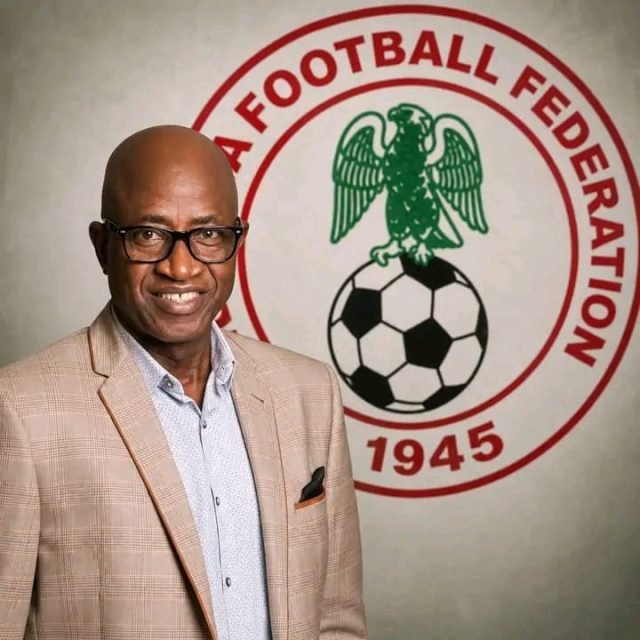

Former Nigeria international Segun Odegbami has warned that replacing the leadership of the Nigeria Football Federation will not by itself resolve the country’s long-running football problems, arguing that the crisis requires structural and legal reforms rather than another change of officials.
Odegbami made the assessment on Friday, August 28, 2026, during an interview with Channels Television, following the resignation of NFF President Ibrahim Gusau and General Secretary Mohammed Sanusi. The departures have intensified calls for a fresh direction for Nigerian football after a period of mounting controversy and disappointing results.
The former Super Eagles captain described the leadership shake-up as only one part of a much larger problem that has developed over several decades. In his view, repeatedly replacing administrators without addressing the system that produces recurring disputes would simply reproduce the same problems.
Odegbami said Nigerian football needs a coherent framework capable of producing sustained success across national teams and domestic football rather than relying on short-term administrative changes.
The football legend argued that Nigeria’s problems extend beyond the individuals occupying positions within the NFF.
He said years of administrative disagreements, legal disputes and competing interests have created a complicated system that makes it difficult for stakeholders to agree on a clear direction.
According to Odegbami, football attracts intense public interest, with supporters, administrators, former players and other stakeholders often convinced that they know the solution. That environment, he suggested, can make meaningful reform more difficult when there is no agreed institutional framework.
His preferred approach would involve first identifying the fundamental problems affecting the sport and then creating a structure that allows the different components of Nigerian football to operate with clearer responsibilities.
The areas requiring attention include:
- Football administration and governance.
- The legal framework surrounding the NFF.
- Development of young players.
- Continuity in national-team programmes.
- Domestic football structures.
- Accountability among football administrators.
- Long-term planning rather than short-term interventions.
For Odegbami, leadership elections should therefore be part of a wider reform process rather than the end goal.
The debate over the future of Nigerian football comes after the resignation of Gusau and other senior NFF officials.
Gusau’s departure followed intense pressure surrounding the country’s football administration. Nigeria’s failure to qualify for the 2026 FIFA World Cup had already increased scrutiny of the federation, while the Super Falcons’ failure to qualify for the 2027 Women’s World Cup added to concerns about the performance of the country’s football system.
The leadership crisis has also raised concerns about Nigeria’s relationship with FIFA and the possibility of sanctions if the transition is not properly managed.
Gusau said his resignation was made in the broader interest of Nigerian football and to create room for comprehensive reforms.
The departures have since opened discussions about interim leadership and the process for rebuilding the federation.
But Odegbami’s position is that replacing the current officials with another group of administrators will have limited impact unless the underlying framework changes.
The former international also challenged the way success is measured within Nigerian football administration.
While acknowledging that the outgoing NFF administration could point to achievements during its tenure, Odegbami argued that administrative accomplishments ultimately have to translate into results on the field.
For supporters, the performance of Nigeria’s national teams remains the most visible measure of whether the football system is working.
That creates a difficult gap between administrative claims and public expectations.
Nigerian football supporters judge the system through outcomes such as:
- Qualification for major international tournaments.
- Performance at the World Cup and continental competitions.
- Success of the Super Eagles and Super Falcons.
- Development of competitive youth teams.
- Quality and stability of domestic competitions.
- Production of players capable of competing at the highest level.
Odegbami’s argument is that these outcomes should be the product of a functioning football system rather than occasional successes produced by individual teams or generations of talented players.
Odegbami pointed to established football nations such as Brazil and England when discussing the importance of continuity.
His argument is that successful football countries maintain systems that continuously identify, develop and prepare players rather than depending entirely on individual administrators or coaches.
For Nigeria, that would mean building a development pipeline that links grassroots football, academies, youth national teams, domestic clubs and the senior national teams.
Such a system could reduce the disruption caused by changes in administration and coaching.
The challenge is particularly important for Nigeria because the country has a large pool of football talent but has frequently struggled to convert that potential into consistent international success.
Odegbami believes the objective should therefore be a sustainable production system capable of continually supplying high-quality players to the national teams.
Odegbami also raised a separate legal issue concerning the NFF.
He claimed that the federation’s status under Nigerian law remains problematic and referred to what he described as a longstanding court judgment concerning its legal standing.
The claim adds another layer to the reform debate because the relationship between national football associations, domestic law and FIFA regulations has historically been sensitive.
Any restructuring of Nigerian football would therefore have to account for both the country’s legal framework and FIFA’s requirements for the independence of football associations.
Odegbami’s position is that this issue should be confronted rather than left unresolved while stakeholders focus solely on replacing officials.
The immediate challenge for Nigerian football stakeholders is to turn the current leadership vacuum into a broader reform process.
The resignation of senior officials provides an opportunity to review how the federation operates, but the outcome will depend on whether stakeholders can agree on reforms that survive changes in personnel.
A successful restructuring would need to address governance while also improving player development, domestic competitions and national-team planning.
The coming months will therefore be important for determining whether the current crisis produces another cycle of leadership changes or becomes the starting point for a more fundamental overhaul.
For Odegbami, the distinction is critical: Nigeria does not simply need new people running football. It needs a system capable of delivering consistent results, developing talent and restoring public confidence.
The next NFF leadership will ultimately be judged not only by its promises but by whether Nigerian football becomes more stable, competitive and successful on the pitch.