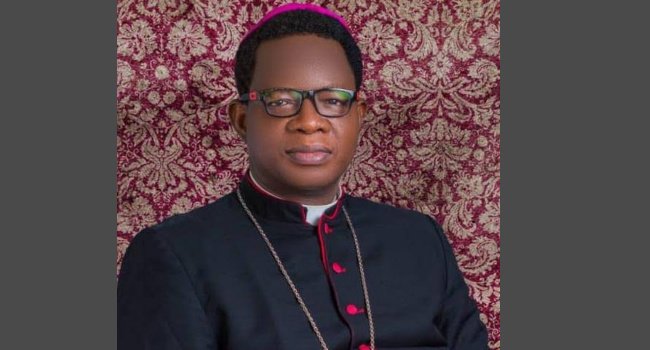

Catholic Bishop of Kontagora Diocese, Most Rev. Bulus Yohanna, has appealed to Kambari, Fulani and Bargawa communities in Niger State’s Agwara and Borgu Local Government Areas to stop fighting and pursue dialogue after a fresh wave of violence reportedly killed dozens of people and displaced hundreds.
Bishop Yohanna, who also chairs the Christian Association of Nigeria (CAN) in Niger State, made the appeal on August 18, 2026, following clashes in parts of the Borgu Emirate. He called on residents, youths and vigilante groups to abandon reprisals and allow security agencies and government authorities to investigate the grievances behind the conflict.
The bishop’s intervention comes as concern grows over the humanitarian consequences of the violence and the risk that retaliatory attacks could deepen divisions between communities that, according to him, had maintained peaceful relations for decades.
In a peace message issued after the clashes, Yohanna urged residents to resist attempts to settle disputes through violence.
He specifically called on members of the affected ethnic communities to cooperate with security agencies rather than taking the law into their own hands. He also asked residents to help authorities identify criminal elements and informants allegedly operating within the communities.
The bishop’s appeal covers not only community leaders but also groups that could influence the security situation on the ground.
He urged:
- Kambari, Fulani and Bargawa residents to stop hostilities.
- Youths and vigilante groups to lay down their arms.
- Residents to report suspected criminals to security agencies.
- Community members to reject retaliatory attacks.
- Stakeholders to resolve grievances through dialogue and lawful channels.
Yohanna said the communities had lived together peacefully for many years and warned against allowing individuals to undermine those relationships.
The bishop’s intervention follows clashes in parts of the Borgu Emirate, where the violence reportedly resulted in dozens of deaths and forced hundreds of residents from their homes.
The latest developments highlight the wider consequences of communal violence beyond the immediate loss of life. Displacement can disrupt livelihoods, restrict access to education and healthcare and place additional pressure on neighbouring communities receiving displaced families.
The bishop condemned killings, destruction and other forms of criminality, regardless of who commits them.
His position was that grievances should be presented to government institutions and security agencies rather than addressed through armed confrontation.
The appeal also places responsibility on community members to help prevent further escalation, particularly by discouraging youths and vigilante groups from engaging in retaliatory operations.
Yohanna also appealed directly to Borgu Emir, Muhammed Haliru Dantoro, to establish peace and conflict-resolution committees involving the affected communities.
Such committees, according to the bishop, could provide a structured forum for the groups to discuss their grievances, negotiate solutions and resolve disputes without resorting to violence.
The proposal places traditional institutions at the centre of the search for a lasting settlement, alongside government and security agencies.
The bishop’s call reflects the need for more than an immediate security response. While security personnel can help contain violence, sustained peace may require mechanisms that allow communities to address underlying disputes and rebuild trust.
Yohanna also commended President Bola Tinubu and Niger State Governor Umaru Bago for their efforts to improve security and restore calm in Agwara and Borgu.
The bishop’s intervention underscores the importance of preventing the recent clashes from developing into a prolonged cycle of revenge.
Once retaliatory violence takes hold, individual attacks can trigger further reprisals, making it increasingly difficult for authorities and community leaders to establish trust.
For the affected communities, the immediate priorities include protecting civilians, restoring security and ensuring displaced residents can safely return to their homes.
Longer-term efforts will require cooperation among several groups, including:
- State and federal security agencies.
- Traditional rulers.
- Religious leaders.
- Youth representatives.
- Community leaders.
- Vigilante organisations.
- Local government authorities.
- Representatives of the affected ethnic communities.
Yohanna’s proposed peace committees could provide one platform for bringing those stakeholders together.
The latest violence places renewed attention on the ability of authorities and community leaders to prevent local disputes from becoming wider security crises.
Bishop Yohanna’s message makes clear that the response cannot rely solely on force. He is calling for communities to cooperate with authorities, reject reprisals and create channels through which grievances can be addressed peacefully.
The next test will be whether the various stakeholders can translate those appeals into concrete measures that protect residents and rebuild confidence among the affected communities.
For families displaced by the clashes, however, the most immediate concern remains safety and the restoration of normal life.
The bishop has urged all parties to choose dialogue over confrontation and make the protection of lives and property the priority as efforts continue to restore peace in Niger State.