
The European Union has approved €2.3 million in emergency humanitarian funding for Nigeria, Cameroon, the Central African Republic and Chad as authorities and health partners intensify efforts to contain ongoing cholera outbreaks across West and Central Africa.
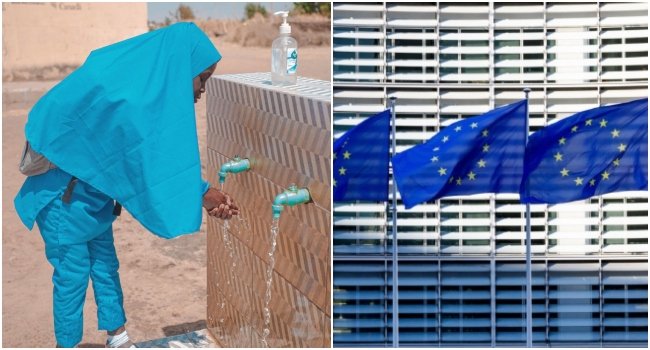
The European Commission announced the funding on Monday, August 17, 2026, saying the package will strengthen outbreak response, treatment, disease surveillance, vaccination and water, sanitation and hygiene measures in affected communities.
The intervention comes as the World Health Organisation reports that more than 61,000 cholera cases were recorded in the WHO African Region during the first five months of 2026, underscoring the continuing public-health pressure facing several countries.
Nigeria will receive the largest share of the package, with €1.5 million earmarked for expanding emergency response teams, supplying cholera kits and improving access to safer water and sanitation services.
Nigeria’s €1.5 million allocation will support both immediate outbreak control and measures designed to reduce further transmission.
According to the European Commission, the funding will help deploy additional intervention teams and provide essential cholera supplies. It will also support water, sanitation and hygiene operations, including interventions at public water points and household water sources.
The Nigerian response will also receive support for disease surveillance in difficult-to-reach communities.
Other planned activities include:
- Strengthening epidemiological surveillance.
- Improving cholera case management.
- Expanding risk communication.
- Increasing community sensitisation.
- Supporting water-treatment interventions.
- Providing essential outbreak-response supplies.
The emphasis on water and sanitation is particularly important because cholera transmission is closely associated with contaminated water and inadequate sanitation.
The EU funding covers four countries experiencing different levels of need and requiring different interventions.
The allocations are:
- Nigeria — €1.5 million: Emergency response teams, cholera supplies, surveillance, case management and water, sanitation and hygiene interventions.
- Central African Republic — €500,000: Case management, vaccination, surveillance, detection and WASH activities.
- Cameroon — €100,000: Outbreak containment, medicines, treatment facilities and oral rehydration services.
- Chad — €200,000: Support for the country’s cholera response.
The combined package is intended to help humanitarian partners respond quickly in affected communities while strengthening systems needed to detect and contain additional cases.
The Central African Republic will receive €500,000 from the emergency package.
The money will be used to expand cholera case management and vaccination efforts while improving water, sanitation and hygiene services.
The EU also plans to support stronger disease surveillance and case detection in the country, alongside communication programmes aimed at helping communities understand how cholera spreads and how to reduce exposure.
Support for safe and dignified burials is also included in the CAR response.
The approach reflects the need to combine medical treatment with prevention. Treating patients alone cannot stop an outbreak if contaminated water and inadequate sanitation continue to expose communities to the disease.
Cameroon has been allocated €100,000 to reinforce its response to the outbreak.
The funding will help deploy additional personnel, provide essential medicines and establish more cholera treatment units in affected locations.
The EU also plans to support oral rehydration stations in communities experiencing severe outbreaks.
Oral rehydration is a critical component of cholera treatment because the disease can cause rapid and severe dehydration. Early access to treatment can significantly improve patients’ chances of recovery.
The relatively smaller allocation for Cameroon reflects the distribution of the overall emergency package rather than a reduction in the importance of treatment and containment measures.
The scale of the 2026 outbreak highlights persistent weaknesses in water and sanitation infrastructure across parts of the continent.
Cholera is preventable and treatable, but outbreaks can spread rapidly where communities lack reliable access to clean water, adequate sanitation and healthcare.
The WHO’s figure of more than 61,000 reported cases in Africa during the first five months of 2026 demonstrates the continuing regional burden.
UNICEF has also identified recurrent public-health emergencies as a major concern across West and Central Africa, where overstretched health systems, low vaccination coverage and climate-related shocks can increase vulnerability to infectious diseases. Flooding, in particular, can increase exposure to waterborne diseases such as cholera.
This means emergency funding must work alongside longer-term investment in:
- Clean and reliable water supplies.
- Sanitation infrastructure.
- Disease surveillance.
- Local healthcare capacity.
- Community health education.
- Emergency preparedness.
European Commissioner for Equality, Crisis Preparedness and Management Hadja Lahbib described cholera as both preventable and treatable, while warning that the disease can still claim lives when communities lack access to safe water and healthcare.
The EU’s emergency financing is therefore designed not only to treat people already affected but also to prevent outbreaks from expanding.
For Nigeria, the size of the allocation makes the country the central focus of the latest European response. The funding will need to translate quickly into frontline teams, supplies, surveillance and improvements in water and sanitation if it is to have the intended impact.
The €2.3 million intervention provides additional resources at a time when health authorities across West and Central Africa are confronting persistent cholera risks.
Its broader significance lies in the combination of treatment, surveillance, vaccination, community engagement and WASH interventions rather than relying exclusively on medical care.
For Nigeria and the three other recipient countries, the immediate priority is to contain existing outbreaks and prevent new transmission.
But the longer-term challenge remains unchanged: reducing dependence on emergency responses by improving access to safe water, sanitation and resilient healthcare systems.
The success of the EU-backed intervention will ultimately depend on how quickly the funds reach affected communities and whether national authorities and humanitarian partners can convert the emergency assistance into sustained disease prevention.