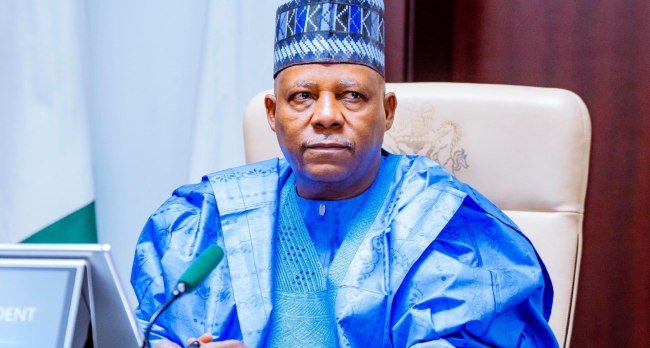

The Federal Government has begun preparations for the nationwide rollout of Nigeria’s 112 emergency number, directing key response agencies to develop an operational framework for the unified toll-free service. Vice President Kashim Shettima issued the directive in Abuja on Tuesday, September 8, 2026, during a stakeholders’ meeting on the National Emergency Number 112 Project.
The move follows the National Economic Council’s approval of 112 as Nigeria’s single national emergency number in April, with the government seeking to replace a fragmented system in which citizens may have to identify the appropriate agency before requesting help.
The new framework is expected to bring the police, emergency management authorities, road safety officials, medical responders and other relevant agencies into a more coordinated response structure.
The Federal Government has constituted a committee involving the Nigeria Police Force, Nigerian Communications Commission, National Emergency Management Agency and Federal Road Safety Corps, among other stakeholders, to produce the roadmap and standard operating procedures for the system.
At the Abuja meeting, Shettima called for the roadmap to reflect international best practices and translate the 112 approval into a functioning national emergency-response mechanism.
The committee will be responsible for defining how calls are received, classified, transferred and responded to across different emergency services. Its recommendations and operating procedures will subsequently be submitted to the National Economic Council for formal endorsement.
The government says the central objective is to reduce delays that can occur when people experiencing emergencies have to determine whether to contact the police, fire service, ambulance providers or another agency.
The system is intended to cover situations including:
- Security threats and armed attacks
- Road crashes and other accidents
- Fire outbreaks
- Medical emergencies
- Kidnapping and other life-threatening incidents
- Major disasters requiring coordinated intervention
Shettima also indicated that funding would be critical to the implementation of the project and assured stakeholders that resources would be mobilised to support the initiative.
Nigeria has operated multiple emergency contacts across states and agencies, creating differences in how calls are received and handled.
Lydia Aina, Personal Assistant to the President on e-Governance in the Office of the Vice President, said the existing arrangement involves multiple agencies, systems and jurisdictions. She said the government wants to move from fragmented state-level arrangements toward a coordinated national structure.
The challenge extends beyond simply assigning a number to citizens. A national emergency line requires functioning call centres, trained personnel, reliable telecommunications infrastructure and clear procedures for transferring incidents to the agency capable of responding.
The government’s immediate priorities therefore include establishing governance arrangements and defining responsibilities among participating agencies.
This means the effectiveness of Nigeria’s 112 emergency number will ultimately depend on what happens after a citizen makes the call—not merely on the availability of the number itself.
The planned national rollout will build on infrastructure that the Nigerian Communications Commission has already developed.
In July, the State House said the NCC had established about 35 Emergency Communications Centres (ECCs) across the country. The government said the centres would form part of the infrastructure supporting the national emergency number.
The earlier announcement also highlighted the need for state governments and emergency response agencies to maintain the infrastructure and ensure that calls reach the appropriate responders.
This is significant because a central emergency number can only improve response times if the receiving centres remain operational and responders are available to act on information received.
Previous discussions around Nigeria’s emergency response system have identified connectivity, coordination and management of emergency communication centres as areas requiring attention.
The Nigeria Police Force has expressed support for adopting 112 as the country’s unified emergency contact.
Inspector General of Police Olatunji Rilwan Disu said a single number would make it easier for people facing emergencies to seek assistance without first having to determine which response organisation is responsible for the incident.
Other agencies represented in the implementation process include:
- Nigerian Communications Commission (NCC)
- National Emergency Management Agency (NEMA)
- Federal Road Safety Corps (FRSC)
- Nigeria Police Force (NPF)
- National Orientation Agency (NOA)
- Other relevant emergency-response organisations
NEMA Director-General Zubaida Umar, FRSC Corps Marshal Shehu Mohammed and NOA Director-General Lanre Issa-Onilu were among officials who pledged their agencies’ support for the initiative.
The immediate task is to turn the government’s policy approval into a detailed implementation programme.
The multi-agency committee must establish the operational standards, determine responsibilities, strengthen coordination between responders and produce a roadmap that can receive NEC approval.
The July State House announcement had already called for stronger cooperation from state governments, emergency responders and other stakeholders, particularly because emergency services ultimately operate across federal and state jurisdictions.
For Nigerians, the success of the 112 emergency number will be measured by whether a call for help produces a rapid and coordinated response.
The government has now moved beyond approving the number and into the more difficult phase of building the system behind it. The next milestones—finalising the roadmap, securing funding, establishing operating standards and ensuring responder readiness—will determine whether 112 becomes a dependable national emergency lifeline.