
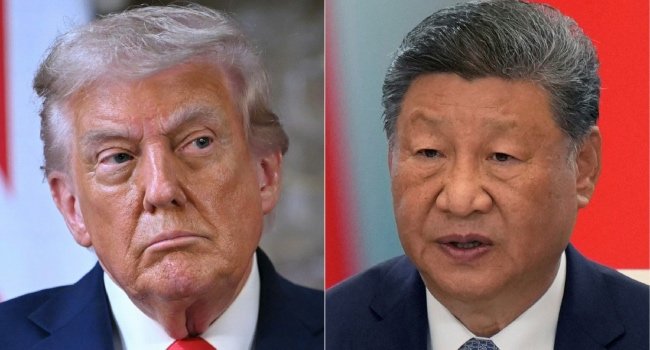

China has urged the United States to halt preparations for conflict in outer space after Washington publicly acknowledged that the US Space Force has deployed weapons in orbit, escalating concerns over a potential new phase of the military rivalry between the two powers.
Chinese Foreign Ministry spokesperson Guo Jiakun issued the warning on Tuesday, September 15, 2026, in Beijing, a day after US Air Force Secretary Troy Meink disclosed that the Space Force now possesses “on-orbit space control weapons” capable of defending American forces against hostile actions.
The US announcement marked the first public confirmation by Washington that American military weapons are operational in orbit. Officials did not disclose the type, number or location of the systems, citing their strategic nature.
Beijing has consistently opposed the weaponisation of outer space, arguing that placing military weapons in orbit could trigger an arms race and turn space into another theatre of international conflict.
Guo’s comments came as China responded to the unprecedented US disclosure.
Beijing has maintained that outer space should primarily serve peaceful purposes and has repeatedly criticised US efforts to expand military capabilities beyond Earth.
China’s position centres on preventing space from becoming a battlefield involving major military powers. Its foreign policy documents have also called for international rules aimed at preventing the deployment and use of weapons in outer space.
The latest warning comes at a particularly sensitive moment because Washington and Beijing already compete across several strategic areas, including:
- Advanced military technology
- Artificial intelligence
- Satellite and space capabilities
- Missile defence
- Cyber warfare
- Regional military influence
The emergence of weapons capable of operating directly in orbit adds another layer to that competition.
The United States has presented its space capabilities primarily as a response to growing threats from rival powers.
Meink made the disclosure at the Air, Space and Cyber Conference in National Harbor, Maryland, on September 14. He said the weapons were intended to protect the joint force from hostile actions and support US space-control capabilities.
However, US officials have provided few technical details.
The term “space control” can encompass a broad range of military activities, including capabilities designed to protect friendly satellites or disrupt, disable or otherwise counter hostile space systems.
The lack of specific information has left analysts debating the precise nature of the newly acknowledged weapons.
The significance of the announcement extends beyond the existence of a new weapons system.
For years, the US, China and Russia have developed technologies designed to interfere with or defend space-based military assets. Satellites support critical functions including communications, navigation, intelligence gathering and military operations.
Washington has accused China and Russia of developing and testing capabilities that could threaten satellites and other space infrastructure. The US disclosure therefore signals a greater willingness to publicly acknowledge capabilities that had previously remained largely classified.
The announcement also comes as the United States develops the broader Golden Dome missile-defence initiative, which includes plans involving space-based systems.
That combination could make space security an increasingly important part of US defence planning.
The dispute over space weapons reflects a much broader deterioration in strategic trust between Washington and Beijing.
Both countries increasingly view space as essential to national security and military effectiveness. Modern armed forces rely heavily on satellites for communications, surveillance, navigation and targeting.
That dependence means an attack on space infrastructure could have consequences far beyond orbit.
China has repeatedly accused the United States of treating space as a military domain and driving an arms race. Beijing’s official position is that countries should negotiate international mechanisms to prevent the deployment of weapons in space.
At the same time, Washington argues that it must maintain the ability to protect its forces and satellites from increasingly sophisticated threats.
The latest exchange raises concerns about whether the US disclosure could encourage other major powers to accelerate their own space-weapons programmes.
Space warfare differs from traditional military conflict because damage to satellites can affect civilian and military systems simultaneously. Navigation, communications, weather forecasting and financial infrastructure all depend to varying degrees on space-based technology.
Military experts therefore warn that competition in orbit could create risks even without a conventional war.
Potential areas of concern include:
- Anti-satellite weapons
- Electronic jamming
- Cyberattacks against satellite networks
- Space-based surveillance
- Defensive and offensive orbital systems
- Missile-defence technologies operating from space
The United States has not identified the newly acknowledged weapons publicly, leaving significant questions about their capabilities and intended missions.
China’s latest warning is unlikely to end the military competition between Washington and Beijing, but it highlights the growing pressure for clearer international rules governing military activities in space.
The central challenge is balancing national security requirements with efforts to prevent miscalculation.
As more countries develop sophisticated space capabilities, the absence of detailed transparency could increase uncertainty between rival militaries.
For now, the US says its orbital weapons are intended to protect American forces from hostile actions, while China is demanding that Washington stop expanding its military presence in space.
The dispute underscores a broader reality: outer space has become an increasingly important strategic domain, and competition between the world’s major powers is moving beyond Earth.