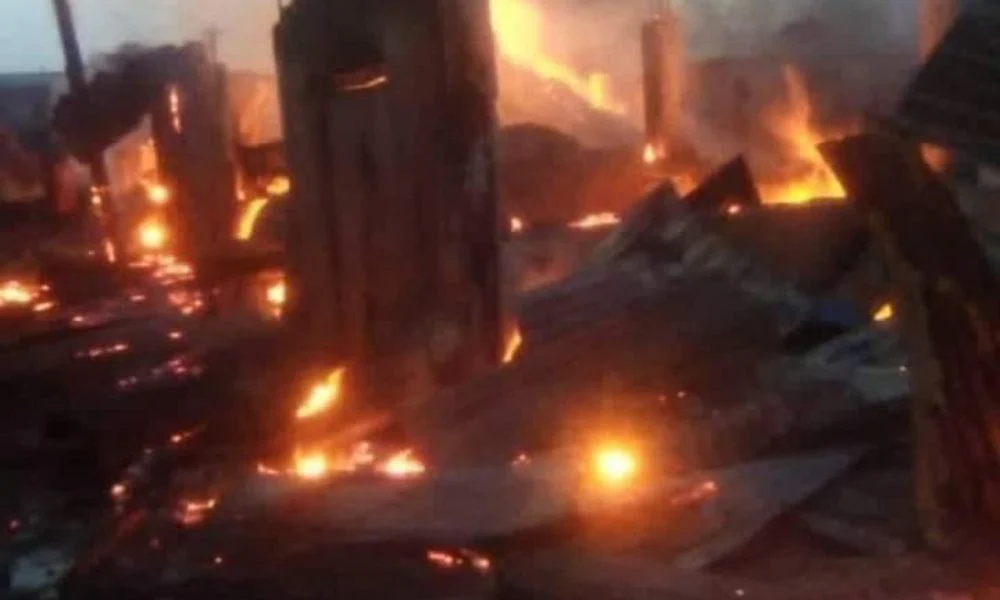


The Ebola response in the Democratic Republic of Congo is facing a fresh setback after six Red Cross workers were injured in separate attacks last week, raising concerns that violence could further slow efforts to contain the country’s deadliest Ebola outbreak.
The incidents occurred between August 17 and August 19 in Ituri, Haut-Uele and North Kivu provinces, areas already struggling with insecurity, weak health infrastructure and difficult access to affected communities. The International Red Cross and Red Crescent Movement said the attacks damaged ambulances and response equipment while reducing the ability of frontline teams to reach people who need urgent care.
The Red Cross said 12 volunteers have now been injured in 11 violent incidents since the outbreak was declared on May 15. Ambulances and other emergency equipment have also been damaged during the attacks.
The development comes as health authorities and international partners intensify efforts to control an outbreak caused by the rare Bundibugyo species of Ebola. The World Health Organization has classified the situation as a public health emergency of international concern.
The latest incidents illustrate the security difficulties facing teams responsible for surveillance, treatment, contact tracing and safe burials.
On August 17, a Ugandan Red Cross convoy supporting the Ebola operation came under attack in Ituri Province, the centre of the outbreak. One person suffered serious injuries, while two ambulances were pelted with stones and vandalised.
The following day, two volunteers were attacked while attempting to conduct an Ebola-related burial in Haut-Uele. They were evacuated for medical treatment, and two vehicles were damaged during the operation.
A third incident occurred on August 19 in Beni, North Kivu Province, where three volunteers were attacked and injured. Equipment being used for the Ebola response was also destroyed.
- Red Cross volunteers and humanitarian personnel
- Ambulances and response vehicles
- Equipment required for emergency health operations
- Safe and dignified burial activities
- Access to communities affected by Ebola
The Red Cross warned that every injured responder and damaged vehicle reduces the capacity of teams to provide emergency services and makes it harder to interrupt chains of transmission.
The security problem is particularly serious because Ebola control depends on responders being able to move quickly between communities.
Health teams must identify suspected cases, collect samples, trace people who may have been exposed, provide medical care and monitor contacts. Safe burials are also essential because the virus can remain infectious in the bodies of people who die from the disease.
When responders cannot safely reach affected communities, transmission chains can remain undetected for longer.
WHO and the Africa Centres for Disease Control and Prevention have already identified insecurity, population movement, poor roads, misinformation and limited access to healthcare as major barriers to the response.
The situation is particularly difficult in eastern DR Congo, where armed groups have operated for years and communities have experienced repeated humanitarian crises.
The security challenge also intersects with public mistrust. Where communities fear health workers or question official information, efforts such as contact tracing, isolation and supervised burials can face resistance.
The latest violence comes as the Ebola outbreak continues to expand.
According to WHO figures cited in reports on August 24, more than 5,000 confirmed infections and more than 2,500 deaths have been recorded in DR Congo. The outbreak has become the country’s largest and deadliest Ebola outbreak.
The outbreak is caused by Bundibugyo virus, a species distinct from the Zaire Ebola virus responsible for previous major epidemics in the region.
Unlike Zaire Ebola, Bundibugyo virus currently has no licensed vaccine or specifically approved treatment. WHO says research is underway to evaluate candidate vaccines and therapies.
WHO and its partners are relying heavily on conventional outbreak-control measures, including:
- Early identification and laboratory confirmation of cases
- Isolation and clinical care
- Contact tracing
- Infection prevention and control
- Safe and dignified burials
- Community engagement
- Protection and support for frontline workers
WHO has also reported that investigational vaccines and treatments are being assessed through clinical research rather than treated as established countermeasures for Bundibugyo virus.
The security crisis cannot be separated from the question of community trust.
WHO and Africa CDC have called for a response that places affected communities at the centre of Ebola-control efforts. Their August assessment identified community involvement as essential to early detection, reporting of suspected cases, contact tracing, treatment and safe burials.
This approach is particularly important in areas where residents may have experienced years of conflict or displacement and may be suspicious of outside interventions.
Community leaders, religious figures, women and youth groups can help health authorities explain why measures such as supervised burials and contact monitoring are necessary.
The goal is to ensure that Ebola-control measures are understood as protective interventions rather than threats imposed on communities.
The Red Cross has called on communities, local leaders and other stakeholders to protect humanitarian personnel and allow them to work without intimidation or violence.
The organisation’s warning comes as responders continue working in difficult conditions, often in regions where insecurity limits movement.
WHO has similarly stressed that frontline health workers need protection, equipment, reliable support and access to affected populations if the response is to keep pace with transmission.
The issue extends beyond the Red Cross. Laboratory personnel, ambulance crews, contact tracers, burial teams, community health workers and clinical staff all depend on secure access to affected areas.
Containing the Ebola outbreak will require security measures to move alongside medical interventions.
Authorities and humanitarian organisations must ensure that response teams can reach communities safely while strengthening public communication and addressing concerns that fuel mistrust.
International support will also remain important. WHO and Africa CDC have called for faster delivery of resources, stronger surveillance, expanded treatment capacity and greater protection for frontline workers.
The latest attacks demonstrate that the Ebola response is fighting two interconnected threats: a highly dangerous infectious disease and an environment in which health workers cannot always operate safely.
Unless responders can reach patients, trace contacts and carry out safe burials without fear of attack, medical resources alone may not be enough to bring the outbreak under control.