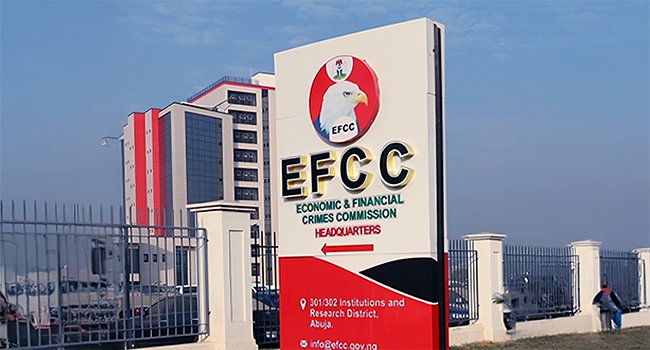

The Economic and Financial Crimes Commission (EFCC) has recovered more than N115 billion in outstanding Niger Delta Development Commission (NDDC) levies, helping clear the liabilities of 19 oil and gas companies, according to findings contained in a recent Nigeria Extractive Industries Transparency Initiative (NEITI) report.
The recovery is significant because NDDC levies represent statutory contributions paid by upstream oil companies to support development in the Niger Delta. NEITI’s oil and gas data system identifies the NDDC levy as a 3% contribution tied to the annual budgets of upstream companies and intended to address development and ecological challenges in the region.
The development also highlights the role of enforcement agencies in recovering revenues that would otherwise remain unpaid and the continuing scrutiny of financial obligations within Nigeria’s oil and gas industry.
The NDDC levy has remained an important component of Nigeria’s extractive-sector revenue framework, particularly because it is designed to fund development interventions in oil-producing communities.
NEITI’s audits have repeatedly identified outstanding obligations by oil companies and raised questions about the tracking and reconciliation of payments made through recovery processes.
A previous NEITI audit found that EFCC and NDDC had worked together to recover unpaid levies. However, the audit also recommended reconciliation between the two institutions to establish how much had actually been recovered and what, if anything, remained outstanding.
The latest recovery figure therefore represents an important development in efforts to enforce payment obligations, while also underscoring the need for transparent documentation of recovered funds.
Key points from the development
- More than N115 billion in NDDC-related liabilities was recovered.
- 19 oil companies were reportedly cleared of outstanding obligations.
- The EFCC played a central role in the recovery process.
- The development follows years of NEITI scrutiny of unpaid NDDC levies.
- Reconciliation and transparent accounting remain important for tracking recovered funds.
The NDDC levy is not an ordinary commercial payment. It is a statutory contribution linked to upstream oil and gas operations and is intended to support development in the Niger Delta.
NEITI’s public oil and gas dashboard separately tracks NDDC payments alongside other major revenue streams, including petroleum profit tax, royalties, gas-flaring penalties, company income tax and Nigerian Content Development and Monitoring Board payments.
This makes the recovery of unpaid levies relevant beyond the affected companies. Recovering outstanding obligations potentially increases the resources available for development programmes in communities affected by oil and gas production.
At the same time, NEITI and international extractive-sector transparency assessments have highlighted concerns about how NDDC-related revenues are managed and disclosed.
The Extractive Industries Transparency Initiative (EITI), in its assessment of Nigeria’s extractive-sector governance, noted weaknesses in transparency surrounding the financial management of NDDC revenues and called attention to the need for stronger public disclosure.
The reported clearance of 19 companies indicates that the recovery exercise was not limited to a single outstanding account.
The companies had accumulated liabilities connected to their statutory obligations, with the EFCC becoming involved in efforts to recover the funds.
For oil producers, compliance with statutory payments is a key part of operating within Nigeria’s regulatory framework. Unresolved liabilities can create revenue gaps for institutions such as the NDDC while also making it more difficult for regulators and auditors to establish whether companies have fully met their obligations.
NEITI’s wider audit work is designed to identify such discrepancies and provide data that government agencies can use to improve revenue collection.
The agency currently maintains an oil and gas data platform that allows users to examine company payments across different revenue streams and years, including NDDC contributions.
What the recovery could mean
The recovery could:
- Improve collection of statutory oil-sector obligations.
- Strengthen NDDC’s revenue position.
- Reduce the volume of outstanding liabilities owed by oil companies.
- Provide a basis for further enforcement against defaulting companies.
- Improve government oversight of extractive-sector payments.
The latest development fits into NEITI’s wider mandate of improving transparency and accountability across Nigeria’s extractive industries.
NEITI publishes audit reports covering oil and gas as well as solid minerals and provides public datasets on production, exports and payments to government institutions. Its current platform records more than 830 billion dollars in cumulative oil and gas revenue data covering 1999 to 2023 and lists 174 audited companies for 2023.
The agency’s reports have repeatedly highlighted unpaid government revenues, discrepancies and weaknesses in the reconciliation of payments.
The EITI’s assessment of Nigeria also noted that payments to NDDC and other entities require greater clarity in public reporting, particularly regarding whether such funds should be treated as government revenue or mandatory social expenditures.
That distinction matters because recovering money is only one part of the accountability process. Authorities must also be able to show how much was recovered, from whom, when the money was received and how it was subsequently accounted for.
The recovery provides an opportunity for the relevant agencies to strengthen the system for tracking NDDC payments from oil and gas companies.
The next stage should involve clear reconciliation of recovered amounts between the EFCC and NDDC, particularly given NEITI’s earlier finding that payment records held by the two institutions were not fully aligned.
For the oil industry, the development could also signal increased enforcement against companies that fail to meet statutory financial obligations.
More broadly, the recovery reinforces the importance of NEITI’s audit process in identifying revenue gaps and providing information that can support enforcement.
Ultimately, the impact of the recovered N115 billion will depend not only on the collection itself but also on transparent accounting and the effective use of the funds for the purposes for which NDDC levies are intended.