
Nigeria’s opposition coalition has reached a decisive stage ahead of the 2027 presidential election, with the challenge shifting from building an alliance to determining which politician will lead it into the contest against the ruling All Progressives Congress (APC).
The leadership question has become increasingly difficult after Rabiu Kwankwaso publicly called on former Vice President Atiku Abubakar to give way to Peter Obi, while Obi has maintained his own presidential ambitions. The competing positions expose the central dilemma facing the coalition: how to persuade major political figures to subordinate individual ambitions to a common electoral strategy.
The opposition’s efforts have brought previously separate political interests into a common negotiating space, but unity alone will not produce an election-winning structure. The coalition must still agree on its presidential candidate, establish a credible selection process and build the organisational machinery required to compete nationwide.
With the 2027 election approaching, the question is becoming less about whether the opposition can unite and more about whether it can convert that unity into an effective political campaign.
The opposition’s coalition-building process has created a platform for several political forces to work together, but the emergence of competing presidential ambitions has exposed the limits of that arrangement.
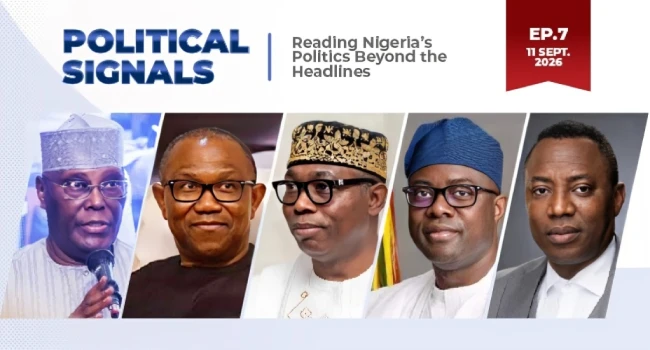
Atiku, Obi and Kwankwaso each bring different political assets to the negotiating table.
- Atiku Abubakar: extensive national political experience and established political networks.
- Peter Obi: strong support among sections of younger and urban voters following his 2023 presidential campaign.
- Rabiu Kwankwaso: a substantial political base in Kano and influence across parts of northern Nigeria.
Those strengths also make compromise more difficult. Each politician has a constituency to protect and a political case for seeking the presidency.
Kwankwaso’s call for Atiku to support Obi has therefore elevated an issue that the coalition can no longer avoid: who gets the presidential ticket if the opposition eventually decides to present a single candidate?
The answer will likely determine whether the coalition becomes a genuine electoral alliance or remains a loose collection of opposition forces.
The disagreement over the presidential ticket does not necessarily mean the opposition coalition is collapsing.
Political alliances routinely involve competing interests, negotiations and disagreements. The critical issue is whether the participants can eventually accept a compromise and remain committed to it.
The coalition’s leaders must therefore negotiate more than a candidate’s name. They must determine what each participating political group receives in exchange for supporting the eventual presidential standard-bearer.
Possible areas of negotiation include:
- The method for selecting the presidential candidate.
- The role of individual parties within the coalition.
- Allocation of elective positions.
- Campaign leadership and organisational responsibilities.
- The structure for mobilising voters across the states.
- Guarantees for politicians who surrender their presidential ambitions.
Without an acceptable bargain, the coalition risks retaining several powerful personalities without creating a unified electoral command structure.
That is particularly important because previous reporting has shown that supporters of Atiku and Obi have not been uniformly willing to accept a single-candidate arrangement.
The African Democratic Congress (ADC) has emerged as an important platform in the opposition realignment, with Atiku currently positioned as its presidential candidate.
The party has, however, faced its own political complications as opposition leaders negotiate the broader coalition arrangement.
In August, ADC spokesperson Bolaji Abdullahi said Atiku did not need a coalition to defeat the APC, reflecting the party’s confidence in its candidate and highlighting the tension between individual party strategies and the wider push for opposition unity.
That distinction matters.
A coalition can operate around a common political objective while individual parties continue to protect their own interests. But once the alliance requires one presidential candidate, those interests inevitably collide.
The opposition therefore needs to establish whether the ADC is primarily the vehicle for the wider coalition or whether other parties will seek a separate arrangement around their own candidates.
Until that question is settled, uncertainty over the coalition’s structure could continue.
The opposition’s internal negotiations contrast sharply with the position of the ruling APC, which is approaching the 2027 election as the incumbent party.
The APC’s advantage is not necessarily that it has resolved every electoral challenge. Rather, it has greater clarity over its presidential direction, allowing the party to concentrate on campaign organisation, messaging and defending President Bola Tinubu’s record.
The opposition faces a different sequence of tasks.
It must simultaneously:
- Agree on a presidential candidate.
- Prevent internal divisions from becoming public electoral fractures.
- Build a nationwide campaign structure.
- Convince voters that its coalition represents a credible alternative.
- Translate individual politicians’ support bases into one coordinated voting bloc.
That creates a strategic imbalance.
While the governing party can spend more time selling its record and preparing for the campaign, opposition leaders must still settle the political architecture of their challenge.
The strength of individual politicians does not automatically translate into electoral victory.
Nigeria’s presidential elections require nationwide organisation, including candidates, polling agents, grassroots structures, voter mobilisation, funding, logistics and effective coordination across states.
This is where the opposition coalition faces one of its most important tests.
A candidate may have considerable support online or at major rallies without possessing the organisational infrastructure needed to convert that support into votes.
The coalition must therefore demonstrate that it can move beyond high-profile political meetings and build a functioning campaign operation.
Its success will depend on whether supporters of different politicians are willing to work for a common candidate after their preferred aspirant loses the nomination battle.
That could prove more difficult than creating the coalition itself.
What to Watch as 2027 Approaches
The next phase of the opposition’s development will provide important signals about its chances in 2027.
Four developments deserve particular attention:
1. How the candidate is selected
A transparent and credible process could help reduce resentment among competing camps. A process perceived as favouring one politician could instead deepen existing divisions.
2. Whether Atiku, Obi and Kwankwaso compromise
The three politicians remain central to the coalition’s strategic calculations because of their respective political networks and constituencies.
3. Whether the coalition builds state-level structures
National political agreements will have limited electoral value without strong grassroots organisation across Nigeria.
4. How the APC responds
The ruling party is likely to emphasise any disagreements within the opposition as evidence that the coalition cannot provide a stable alternative government.
The opposition’s response to that argument could become an important part of the 2027 campaign narrative.
The opposition has already demonstrated that competing political interests can sit together and negotiate a common platform.
The harder challenge is accepting the outcome of those negotiations.
If the coalition eventually chooses a presidential candidate, the politicians who lose that contest will have to decide whether to support the winner or pursue their own political paths.
That decision could determine the coalition’s electoral strength more than the initial agreement to form the alliance.
The opposition therefore faces a fundamental choice: prioritise individual presidential ambitions or accept the compromises required to mount a unified challenge to the APC.
For voters, the eventual candidate will matter. But so will the process that produces that candidate.
As the 2027 election approaches, the coalition’s credibility will increasingly depend not on how many politicians it can bring together, but on whether those politicians can agree on who should lead them and remain united after that decision is made.