
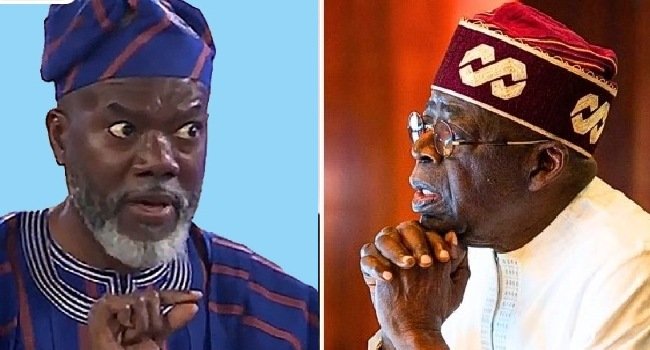

Nigeria’s Ambassador-designate to Mexico, Reno Omokri, has renewed his defence of President Bola Tinubu ahead of the 2027 election, insisting that the President does not have a criminal record with the United States Federal Bureau of Investigation.
Omokri made the claim during an appearance on Channels Television’s Sunday Politics on September 13, 2026, amid renewed political debate over U.S. records connected to Tinubu and historical investigations dating back decades.
The comments come as the 2027 presidential contest increasingly focuses on candidates’ backgrounds, past records and the credibility of competing political narratives.
Omokri argued that Nigerians should distinguish between an FBI record and a criminal record, saying the existence of information held by a law-enforcement agency does not by itself establish criminal wrongdoing.
According to Omokri, the FBI can hold information about individuals without that information constituting evidence of a criminal offence.
He said records can contain personal or biometric information and argued that releasing such material publicly could expose sensitive details.
Omokri specifically referenced information such as:
- Fingerprints and other biometric identifiers
- Blood-group information
- DNA-related data
- Personal information obtained during background checks
He maintained that the presence of such information in an FBI database should not automatically be interpreted as proof that the individual has committed a crime.
The ambassador-designate has made substantially similar arguments in previous interviews and public statements while defending Tinubu against claims surrounding historical U.S. records. The central position has remained that an official record and a criminal conviction are fundamentally different things.
The controversy surrounding Tinubu’s FBI records is linked to Freedom of Information Act proceedings in the United States involving records associated with a historical investigation.
Reports in August indicated that the FBI asked a U.S. court to allow it to submit a confidential explanation concerning records it was withholding in response to requests relating to Tinubu. The material concerns records from the early 1990s rather than a newly opened 2026 criminal case.
Importantly, reports have also indicated that some material was submitted to the U.S. court under seal rather than released wholesale to the public. That means claims that the FBI has publicly released Tinubu’s criminal records can create a misleading impression about the status of the documents.
Omokri has repeatedly rejected the description of the records as evidence of a criminal record against Tinubu.
He has also referred to a 2003 record check which he said returned negative results for criminal arrest records and warrants against the then Lagos State governor. That document and Omokri’s interpretation of it have become part of his broader defence of the President.
The dispute has assumed greater political significance because Tinubu is expected to seek another presidential term in 2027, while opposition parties are working to challenge the incumbent.
The debate over the President’s U.S. records has therefore become part of a wider contest over character, credibility and political accountability.
Omokri has previously challenged opposition politicians, particularly Peter Obi, to disclose any comparable records they may have with U.S. authorities if they are demanding transparency from Tinubu.
Obi and other opposition figures, however, have questioned Tinubu’s efforts to restrict the release of U.S. records, arguing that Nigerians deserve greater clarity concerning matters involving the President’s past.
That disagreement means the FBI controversy is unlikely to disappear as the 2027 election approaches.
The political importance of the dispute goes beyond the technical meaning of an FBI record.
For the opposition, questions surrounding Tinubu’s past can become a campaign issue concerning transparency and accountability. For the President’s supporters, the controversy can be framed as an attempt to weaponise historical records and personal information for political purposes.
The distinction between allegation, investigation, official record and criminal conviction will therefore remain crucial as the debate develops.
Omokri’s latest comments do not independently resolve the underlying controversy. They represent his interpretation and defence of the President, while the U.S. legal proceedings concerning the requested records remain a separate matter.
With the 2027 election approaching, the dispute is likely to remain part of the broader political battle over Tinubu’s record, the opposition’s strategy and the issues voters will ultimately prioritise.
Reno Omokri has again rejected claims that President Bola Tinubu has a criminal record with the FBI, arguing that the existence of FBI records should not be confused with evidence of criminality.
However, the wider controversy concerns historical U.S. records and ongoing legal proceedings over their disclosure. As the 2027 presidential contest intensifies, voters will increasingly have to separate verified documentary facts from political claims and counterclaims.