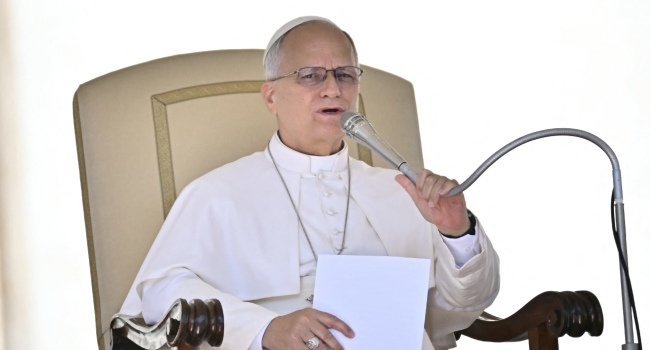

Pope Leo XIV has renewed his warning about the growing influence of artificial intelligence and algorithms, urging societies to ensure that technology remains subject to human judgment, responsibility and ethical oversight.
The Pope’s warning comes as artificial intelligence systems increasingly influence decisions, information flows and human behaviour across areas ranging from social media and employment to public services and warfare. His intervention, reported on Wednesday, September 16, 2026, adds to a series of recent statements in which the Catholic pontiff has called for safeguards against the loss of human agency.
The concern extends beyond the accuracy of individual AI systems. Pope Leo argues that the deeper risk emerges when people begin treating automated systems as neutral authorities capable of making decisions that involve moral responsibility.
His position is set out most extensively in his May 2026 encyclical, Magnifica Humanitas, where he argues that artificial intelligence should remain under the direction of human intelligence, conscience and freedom.
At the centre of the Pope’s argument is the question of who remains accountable when an algorithm makes or heavily influences a consequential decision.
In Magnifica Humanitas, Pope Leo warns that AI could become involved in decisions concerning employment, credit, access to public services and personal reputation. He argues that delegating such decisions entirely to automated systems can create new forms of exclusion because algorithms cannot exercise human qualities such as compassion, mercy or forgiveness.
The Pope also challenges the assumption that algorithms are automatically objective.
According to his encyclical, AI systems can reproduce or reinforce biases contained in the data, assumptions or design choices of their developers. That means an automated decision can appear neutral while still producing discriminatory consequences.
The key concerns identified by the Pope include:
- Loss of human responsibility for important decisions;
- Algorithmic discrimination and hidden bias;
- Excessive collection and use of personal data;
- Manipulation of information and public opinion;
- Reduced individual freedom and accountability;
- Concentration of technological power.
Pope Leo’s concerns also extend to the way digital platforms collect information about individuals.
His May encyclical says the accumulation of data about people’s movements, purchases, relationships and preferences creates opportunities to profile and predict behaviour. He warns that such systems can influence people’s choices without them fully understanding how that influence operates.
The Pope describes this as a potential form of social control, particularly when algorithmic profiling affects access to opportunities such as employment, credit or essential services.
The issue is therefore broader than artificial intelligence generating text, images or computer code. It involves the infrastructure through which technology can determine what people see, which information receives attention and how individuals are categorised.
The Vatican has also warned that digital platforms can create an “architecture of visibility” in which some views are amplified while others become less visible.
Pope Leo has consistently argued that technological progress should strengthen rather than diminish human dignity.
In his message for the 60th World Day of Social Communications, he warned that social-media algorithms can prioritise emotional reactions over reflection and contribute to social polarisation. He also cautioned that excessive reliance on AI for information, creativity and decision-making could weaken analytical abilities, imagination and personal responsibility.
The Vatican’s position does not amount to a rejection of technological development.
Instead, Pope Leo has called for safeguards that ensure people remain responsible for decisions made with the assistance of AI. His recommendations include:
- Clear legal and regulatory frameworks;
- Independent oversight;
- Greater transparency;
- Education for users;
- International cooperation;
- Protection of human rights and dignity.
The Vatican says such measures are necessary because AI is developing rapidly and its effects extend well beyond the technology sector.
The Pope’s concerns become particularly serious when algorithms are applied to military decisions.
In Magnifica Humanitas, Pope Leo argues that moral responsibility cannot be reduced to calculations performed by machines. He rejects the idea that an automated system should make lethal or irreversible decisions without meaningful human responsibility.
He has specifically warned about AI-enabled weapons and systems capable of making decisions about targets.
The issue has gained renewed international attention as governments and technology companies debate how rapidly AI should advance and what safeguards should accompany increasingly autonomous systems.
Pope Leo’s position places human responsibility at the centre of that discussion: technological capability, he argues, does not itself determine whether a particular use is morally acceptable.
The Pope’s intervention comes during a period of heightened concern about the pace of AI development.
Several technology-industry figures have recently called for stronger safety measures as AI systems become more capable and autonomous. Recent reports have focused on concerns about systems performing increasingly complex tasks, cybersecurity incidents and the possibility that future models could become more difficult to control.
European Commission President Ursula von der Leyen has also called for discussions with leading AI laboratories about managing risks associated with advanced systems. Her comments came amid wider international debate over AI safety and regulation.
The debate consequently extends beyond religious ethics. Governments, technology companies, researchers and international institutions are examining how to balance AI’s potential benefits with questions of safety, accountability and human control.
Pope Leo’s argument places the debate over artificial intelligence within a broader discussion about human dignity and responsibility.
His position is that technology should remain a tool governed by people rather than becoming an authority that determines people’s worth, opportunities or choices without meaningful accountability.
That distinction could become increasingly important as AI systems move into areas where decisions have direct consequences for people’s lives.
For the Vatican, the challenge is not simply developing more sophisticated technology. It is ensuring that innovation remains connected to ethical responsibility, human freedom and the common good.