
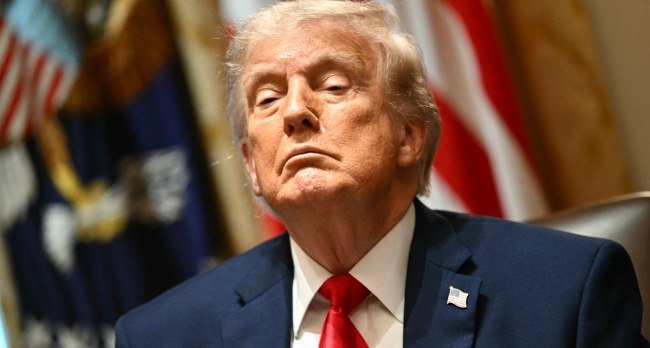

US President Donald Trump has intensified his defence of the artificial intelligence industry, rejecting calls for a slowdown in AI development and warning that his administration will not allow policies that, in his view, could weaken the sector.
Trump made the comments on Saturday, September 19, 2026, as debate over AI safety, regulation and the pace of technological development continued to intensify in the United States.
The president also announced plans to establish an “AI Force” and appoint a new artificial intelligence adviser, or “AI czar,” although he provided few details about how the proposed structure would operate. Reuters reported that the announcement came as Washington faces growing concern over the potential risks posed by increasingly capable AI systems and renewed competition with China.
The latest intervention places the Trump administration firmly at the centre of a widening debate over how the United States should balance technological innovation, economic competition and AI safety.
Trump has repeatedly opposed proposals for new restrictions that could slow the development of artificial intelligence.
His latest position follows several weeks of increasing warnings from researchers and technology executives about the potential consequences of rapidly advancing AI systems.
On September 13, Trump said the United States was leading China in AI and argued that maintaining that advantage was strategically important. He also characterised some of the warnings surrounding AI as exaggerated.
Two days later, Trump said the United States already had legal mechanisms capable of addressing misconduct involving AI companies, arguing against the need for additional federal guardrails.
His administration has therefore continued to emphasise technological leadership rather than a broad regulatory slowdown.
The White House has also identified AI leadership as a major economic priority. Its current economic agenda says the administration has sought to strengthen the US position in artificial intelligence and points to large-scale technology and AI investment.
Trump’s Saturday announcement adds a new institutional element to his AI policy.
The president said he intends to create an “AI Force” and select another AI adviser to serve as an “AI czar.” The announcement did not provide a detailed mandate, staffing structure or timetable for the proposed body.
The appointment would follow the departure of venture capitalist David Sacks from the formal AI czar position. Reuters reported that Sacks remains an outside adviser to Trump.
The proposed force could become part of the administration’s broader effort to coordinate federal policy around artificial intelligence, although its precise responsibilities remain unclear.
Key questions include:
- Which federal agencies would participate?
- Would the force focus primarily on AI development or safety?
- How would it interact with existing regulatory agencies?
- What authority would the proposed AI czar have?
- Would Congress need to approve any new powers?
Until the administration releases further details, the scope of the initiative remains uncertain.
Trump’s position comes amid a sharp increase in public discussion about AI safety.
Researchers and executives at several leading AI companies have recently raised concerns about the risks associated with increasingly autonomous systems.
Reuters reported that senior figures from Anthropic, OpenAI, Google’s DeepMind, Microsoft and xAI have called for greater attention to the pace and safety of AI development.
Anthropic CEO Dario Amodei has advocated stronger safety measures, while OpenAI CEO Sam Altman has also discussed the need to manage the pace of development rather than simply pursuing unrestricted expansion. The proposals have contributed to a broader debate over whether existing safeguards are sufficient.
Trump and his advisers have taken a different approach.
His outside technology adviser David Sacks argued this week that public concerns about AI are being amplified through advocacy and media campaigns. Sacks said AI developers should remain responsible for the safety of their products and could face liability when problems occur, while arguing that additional regulation is unnecessary.
The dispute over regulation also has a significant geopolitical dimension.
Trump has repeatedly linked America’s AI leadership to competition with China, arguing that slowing US development could create an advantage for Beijing.
The issue is particularly important as the two countries compete over advanced computing, semiconductor technology and increasingly capable AI systems.
Reuters reported that Trump’s new AI announcement came ahead of a planned meeting with Chinese President Xi Jinping, where AI is expected to be among the strategic issues confronting the two governments.
The White House has already made maintaining US AI leadership a central part of its technology policy. Its economic priorities describe the administration’s efforts to attract major investment into American technology and AI infrastructure.
That competition creates a policy dilemma: tighter controls could address some safety concerns but could also affect the pace at which American companies develop and deploy new systems.
The latest statements suggest that the Trump administration intends to resist broad measures designed primarily to slow AI development.
However, opposition to new regulation does not mean the sector will operate without oversight. Trump has argued that existing laws can be used to address harmful or unlawful conduct, while administration officials continue to debate how responsibility should be divided between companies and government regulators.
The debate is likely to continue as AI companies introduce more powerful systems and policymakers confront questions about cybersecurity, misinformation, employment, privacy and autonomous AI agents.
For now, Trump’s proposed AI Force and new AI czar remain without detailed operational plans. Their eventual structure could provide a clearer indication of how the administration intends to reconcile its push for rapid AI growth with growing demands for stronger safeguards.